Readings Newsletter
Become a Readings Member to make your shopping experience even easier.
Sign in or sign up for free!
You’re not far away from qualifying for FREE standard shipping within Australia
You’ve qualified for FREE standard shipping within Australia
The cart is loading…


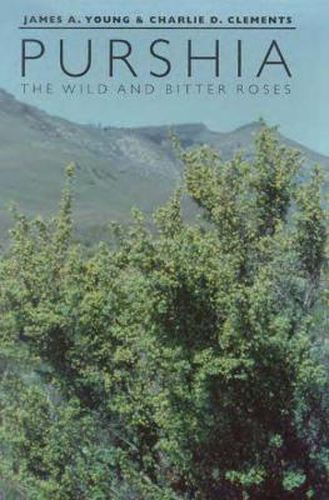
Among the plant species of the Great Basin rangeland, the Purshia - ancient members of the rose family evolved to survive the aridity and temperature extremes of this harsh region - are one of the most important. In this first book-length study of this key plant species, range scientists James A. Young and Charlie D. Clements offer a comprehensive examination of the biology of the Purshias and their significant role in the ecology of the Great Basin. The authors’ discussion is both thorough and broad in scope. They cover the evolution and probable origins of the Purshias (antelope bitterbrush, desert bitterbrush, and cliffrose); the history of their recognition as an important component of the rangeland forage supply for both wild and domesticated animals; the characteristics of the various Purshia plant communities; the ecophysiology of the species, including seed production and the effects of wildfire; the physiology of seeds, the process of germination, and procedures for artificially seeding Purshia to replace natural populations depleted by overgrazing or wildfires; the role of granivores (seed-eating animals, birds, and insects) in the dispersal of Purshia; the role of Purshia in the nutrition of mule deer and domestic livestock; the impact of insects, plant diseases, and wildfire on Purshia species; soil requirements; and the role of Purshia in successful range management. As understanding of the complexity of the rangeland ecological community has grown, so has appreciation for the role of the Purshias within that community. Purshia; The Wild and Bitter Roses offers an informative and thought-provoking survey of a key rangeland plant species with practical application for wildlife and rangeland management, land-use planners, ecosystem analysis, wildlife interest groups, environmentally concerned citizens, and land-restoration efforts. The book is therefore essential reading for botanists, range and wildlife managers, and general readers interested in the natural history of the Great Basin.
$9.00 standard shipping within Australia
FREE standard shipping within Australia for orders over $100.00
Express & International shipping calculated at checkout
Stock availability can be subject to change without notice. We recommend calling the shop or contacting our online team to check availability of low stock items. Please see our Shopping Online page for more details.
Among the plant species of the Great Basin rangeland, the Purshia - ancient members of the rose family evolved to survive the aridity and temperature extremes of this harsh region - are one of the most important. In this first book-length study of this key plant species, range scientists James A. Young and Charlie D. Clements offer a comprehensive examination of the biology of the Purshias and their significant role in the ecology of the Great Basin. The authors’ discussion is both thorough and broad in scope. They cover the evolution and probable origins of the Purshias (antelope bitterbrush, desert bitterbrush, and cliffrose); the history of their recognition as an important component of the rangeland forage supply for both wild and domesticated animals; the characteristics of the various Purshia plant communities; the ecophysiology of the species, including seed production and the effects of wildfire; the physiology of seeds, the process of germination, and procedures for artificially seeding Purshia to replace natural populations depleted by overgrazing or wildfires; the role of granivores (seed-eating animals, birds, and insects) in the dispersal of Purshia; the role of Purshia in the nutrition of mule deer and domestic livestock; the impact of insects, plant diseases, and wildfire on Purshia species; soil requirements; and the role of Purshia in successful range management. As understanding of the complexity of the rangeland ecological community has grown, so has appreciation for the role of the Purshias within that community. Purshia; The Wild and Bitter Roses offers an informative and thought-provoking survey of a key rangeland plant species with practical application for wildlife and rangeland management, land-use planners, ecosystem analysis, wildlife interest groups, environmentally concerned citizens, and land-restoration efforts. The book is therefore essential reading for botanists, range and wildlife managers, and general readers interested in the natural history of the Great Basin.
Search our extensive online catalogue.
