Readings Newsletter
Become a Readings Member to make your shopping experience even easier.
Sign in or sign up for free!
You’re not far away from qualifying for FREE standard shipping within Australia
You’ve qualified for FREE standard shipping within Australia
The cart is loading…


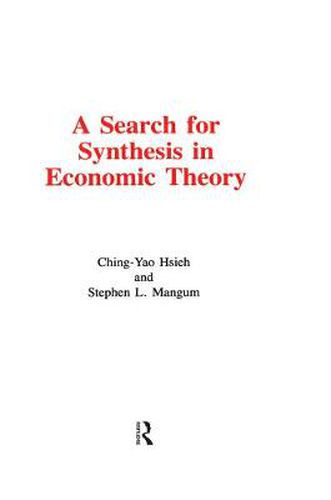
First published in 1986. Since the late 1960s the seeming inability of traditional monetary and fiscal policies to combat
stagflation and address other macroeconomic issues has accelerated the erosion of confidence in the prevailing economic paradigm , the
neoclassical synthesis. * Dissensions among the members of the economics profession on both sides of the Atlantic have grown in number. By the 1970s, a majority of economists had recognized a
crisis in economic theory. Parallel to this development, a crisis has also emerged in the Marxian camp. This volume is a discussion from the various schools of thought around three of the salient common grounds follows: the theory of a monetary economy, the disequilibrium foundations of a general equilibrium theory, and a rekindled interest in institutional factors.
$9.00 standard shipping within Australia
FREE standard shipping within Australia for orders over $100.00
Express & International shipping calculated at checkout
Stock availability can be subject to change without notice. We recommend calling the shop or contacting our online team to check availability of low stock items. Please see our Shopping Online page for more details.
First published in 1986. Since the late 1960s the seeming inability of traditional monetary and fiscal policies to combat
stagflation and address other macroeconomic issues has accelerated the erosion of confidence in the prevailing economic paradigm , the
neoclassical synthesis. * Dissensions among the members of the economics profession on both sides of the Atlantic have grown in number. By the 1970s, a majority of economists had recognized a
crisis in economic theory. Parallel to this development, a crisis has also emerged in the Marxian camp. This volume is a discussion from the various schools of thought around three of the salient common grounds follows: the theory of a monetary economy, the disequilibrium foundations of a general equilibrium theory, and a rekindled interest in institutional factors.
Search our extensive online catalogue.
