Readings Newsletter
Become a Readings Member to make your shopping experience even easier.
Sign in or sign up for free!
You’re not far away from qualifying for FREE standard shipping within Australia
You’ve qualified for FREE standard shipping within Australia
The cart is loading…


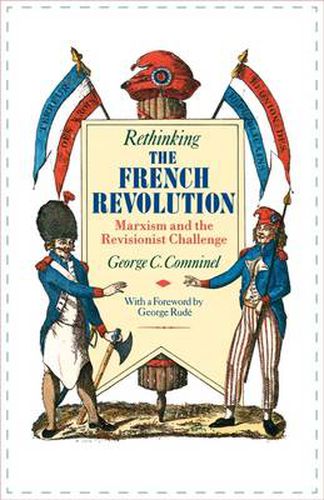
Historians generally-and Marxists in particular-have presented the revolution of 1789 as a bourgeois revolution: one which marked the ascendance of the bourgeois as a class, the defeat of a feudal aristocracy, and the triumph of capitalism. Recent revisionist accounts, however, have raised convincing arguments against the idea of the bourgeois class revolution, and the model on which it is based.
In this provocative study, George Comninel surveys existing interpretations of the French Revolution and the methodological issues these raise for historians. He argues that the weaknesses of Marxist scholarship originate in Marx’s own method, which has led historians to fall back on abstract conceptions of the transition from feudalism to capitalism. Comninel reasserts the principles of historical materialism that found their mature expression in Das Kapital; and outlines an interpretation which concludes that, while the revolution unified the nation and centralized the French state, it did not create a capitalist society.
$9.00 standard shipping within Australia
FREE standard shipping within Australia for orders over $100.00
Express & International shipping calculated at checkout
Stock availability can be subject to change without notice. We recommend calling the shop or contacting our online team to check availability of low stock items. Please see our Shopping Online page for more details.
Historians generally-and Marxists in particular-have presented the revolution of 1789 as a bourgeois revolution: one which marked the ascendance of the bourgeois as a class, the defeat of a feudal aristocracy, and the triumph of capitalism. Recent revisionist accounts, however, have raised convincing arguments against the idea of the bourgeois class revolution, and the model on which it is based.
In this provocative study, George Comninel surveys existing interpretations of the French Revolution and the methodological issues these raise for historians. He argues that the weaknesses of Marxist scholarship originate in Marx’s own method, which has led historians to fall back on abstract conceptions of the transition from feudalism to capitalism. Comninel reasserts the principles of historical materialism that found their mature expression in Das Kapital; and outlines an interpretation which concludes that, while the revolution unified the nation and centralized the French state, it did not create a capitalist society.
Search our extensive online catalogue.
