Readings Newsletter
Become a Readings Member to make your shopping experience even easier.
Sign in or sign up for free!
You’re not far away from qualifying for FREE standard shipping within Australia
You’ve qualified for FREE standard shipping within Australia
The cart is loading…


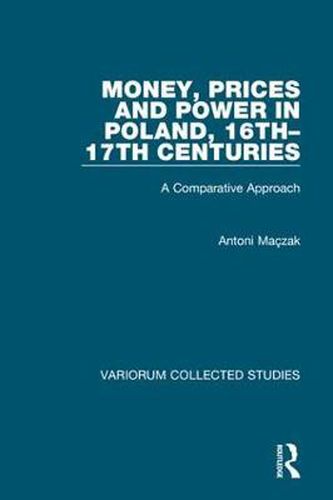
The first articles in this volume focus on sources for the history of Baltic commerce and the evaluation of their data on prices. In most cases, though, surviving data is hardly adequate for any extensive quantitative analysis of Polish economic history, and many of these articles endeavour in different ways to use comparitive approaches to help overcome this lack of substantial statistical base - hence the set of studies on the economy of travelling and the observations of travellers. Professor MaAzak then turns to the structures of power in Poland and elsewhere in late renaissance Europe, looking in particular at informal power relationships and patterns of patronage. In terms of the Polish-Lithunaian state, he would hold that centralized government was already critically weakened in the late 15th century, and the 16th century saw the creation of a new power structure, based on local self-government, and dominated by the nobility.
$9.00 standard shipping within Australia
FREE standard shipping within Australia for orders over $100.00
Express & International shipping calculated at checkout
Stock availability can be subject to change without notice. We recommend calling the shop or contacting our online team to check availability of low stock items. Please see our Shopping Online page for more details.
The first articles in this volume focus on sources for the history of Baltic commerce and the evaluation of their data on prices. In most cases, though, surviving data is hardly adequate for any extensive quantitative analysis of Polish economic history, and many of these articles endeavour in different ways to use comparitive approaches to help overcome this lack of substantial statistical base - hence the set of studies on the economy of travelling and the observations of travellers. Professor MaAzak then turns to the structures of power in Poland and elsewhere in late renaissance Europe, looking in particular at informal power relationships and patterns of patronage. In terms of the Polish-Lithunaian state, he would hold that centralized government was already critically weakened in the late 15th century, and the 16th century saw the creation of a new power structure, based on local self-government, and dominated by the nobility.
Search our extensive online catalogue.
