Readings Newsletter
Become a Readings Member to make your shopping experience even easier.
Sign in or sign up for free!
You’re not far away from qualifying for FREE standard shipping within Australia
You’ve qualified for FREE standard shipping within Australia
The cart is loading…


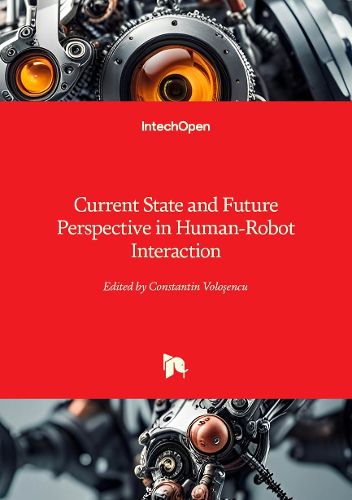
This book addresses the modern field of human-robot interaction, reviewing the field's current state and providing research studies with future perspectives. The book has ten chapters, which cover several topics such as social robots that come to the aid of the elderly through gerontechnology, helping families with children through child-robot interaction, and robots in human households; the issue of mobile robots that move and interact with humans; technologies for robot design; emotional engagement in learning environments, detecting danger and emotions of human subjects in terrorist attack situations; machine ethic issues in artificial intelligence-based robots; and medical robots for assessment, treatment, and rehabilitation of patients diagnosed with neurodegenerative disorders. The book highlights the powerful capabilities of modern robots, including their efficiency demonstrated practically in the case of safe operation, but also draws attention to possible undesirable operations on which science must have its say. It also emphasizes the robot's ability to interact with humans, the need to simplify interaction and the advanced methods to enhance the human-robot interaction. The book is intended for a broad audience, including academics and industrial specialists, such as professors, researchers, designers, and students.
$9.00 standard shipping within Australia
FREE standard shipping within Australia for orders over $100.00
Express & International shipping calculated at checkout
Stock availability can be subject to change without notice. We recommend calling the shop or contacting our online team to check availability of low stock items. Please see our Shopping Online page for more details.
This book addresses the modern field of human-robot interaction, reviewing the field's current state and providing research studies with future perspectives. The book has ten chapters, which cover several topics such as social robots that come to the aid of the elderly through gerontechnology, helping families with children through child-robot interaction, and robots in human households; the issue of mobile robots that move and interact with humans; technologies for robot design; emotional engagement in learning environments, detecting danger and emotions of human subjects in terrorist attack situations; machine ethic issues in artificial intelligence-based robots; and medical robots for assessment, treatment, and rehabilitation of patients diagnosed with neurodegenerative disorders. The book highlights the powerful capabilities of modern robots, including their efficiency demonstrated practically in the case of safe operation, but also draws attention to possible undesirable operations on which science must have its say. It also emphasizes the robot's ability to interact with humans, the need to simplify interaction and the advanced methods to enhance the human-robot interaction. The book is intended for a broad audience, including academics and industrial specialists, such as professors, researchers, designers, and students.
Search our extensive online catalogue.
