Readings Newsletter
Become a Readings Member to make your shopping experience even easier.
Sign in or sign up for free!
You’re not far away from qualifying for FREE standard shipping within Australia
You’ve qualified for FREE standard shipping within Australia
The cart is loading…


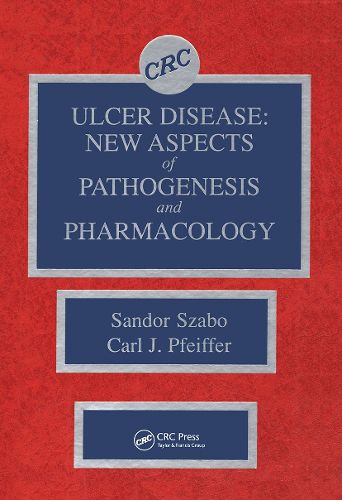
The latest data on the pathogenesis of ulcer disease is presented in this text, with the emphasis that an understanding of the pathogenesis and etiology of ulcer diseases represents the most rational approach to pharmacology - the prevention and treatment of ulcer disease. Early and late biochemical and functional changes, morphologic stages of the injury and healing phases, as well as vascular factors in ulceration are highlighted. In addition, new pathogenetic elements on neuroendocrine and other endogenous modulators and circadian rhythms in ulcerogenesis are covered. The section on new pharmacology consists of several chapters presenting new animal models of gastric, small intestinal and colonic ulcers because in vivo models represent the basis to test and accurately detect new antiulcer drugs. A large series of chapters cover new drugs for ulcer prevention and treatment. This book is indispensible to investigators in basic and applied research, academic and industrial pharmacologists and clinicians in gastroenterology.
$9.00 standard shipping within Australia
FREE standard shipping within Australia for orders over $100.00
Express & International shipping calculated at checkout
Stock availability can be subject to change without notice. We recommend calling the shop or contacting our online team to check availability of low stock items. Please see our Shopping Online page for more details.
The latest data on the pathogenesis of ulcer disease is presented in this text, with the emphasis that an understanding of the pathogenesis and etiology of ulcer diseases represents the most rational approach to pharmacology - the prevention and treatment of ulcer disease. Early and late biochemical and functional changes, morphologic stages of the injury and healing phases, as well as vascular factors in ulceration are highlighted. In addition, new pathogenetic elements on neuroendocrine and other endogenous modulators and circadian rhythms in ulcerogenesis are covered. The section on new pharmacology consists of several chapters presenting new animal models of gastric, small intestinal and colonic ulcers because in vivo models represent the basis to test and accurately detect new antiulcer drugs. A large series of chapters cover new drugs for ulcer prevention and treatment. This book is indispensible to investigators in basic and applied research, academic and industrial pharmacologists and clinicians in gastroenterology.
Search our extensive online catalogue.
