Readings Newsletter
Become a Readings Member to make your shopping experience even easier.
Sign in or sign up for free!
You’re not far away from qualifying for FREE standard shipping within Australia
You’ve qualified for FREE standard shipping within Australia
The cart is loading…


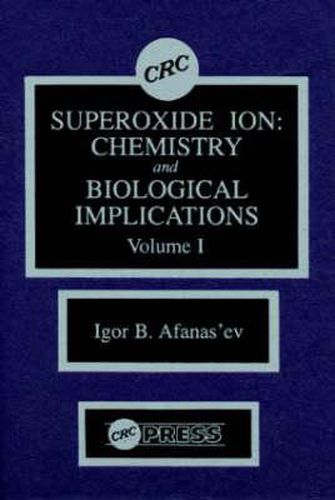
The chemical properties of superoxide ion, its biological role, and the role of other oxygen radicals which arise as a result of its transformations are contained in this text. In Volume I the principal reactions of superoxide ion, including protonation reactions with proton donors, nucleophilic reactions with esters, alkyl halides and other compounds, electron transfer reactions with quinones and metal complexes, are described. Basic quantitative data including rate constants and yields for the reactions of superoxide ion of all types are given in tables. This volume contains the mechanisms of the generation of oxygen radicals in cells and the interaction of superoxide ion with cell components. The role of superoxide ion in lipid peroxidation and destruction of proteins and nucleic acids is explained, as well as oxygen radicals in the mechanisms of toxic and therapeutic action of drugs, especially anticancer antibiotics. In addition, the action of superoxide ion and other oxygen radicals on plants, micro-, and macroorganisms is discussed, along with the role of oxygen radicals in normal metabolic and pathological processes.
$9.00 standard shipping within Australia
FREE standard shipping within Australia for orders over $100.00
Express & International shipping calculated at checkout
Stock availability can be subject to change without notice. We recommend calling the shop or contacting our online team to check availability of low stock items. Please see our Shopping Online page for more details.
The chemical properties of superoxide ion, its biological role, and the role of other oxygen radicals which arise as a result of its transformations are contained in this text. In Volume I the principal reactions of superoxide ion, including protonation reactions with proton donors, nucleophilic reactions with esters, alkyl halides and other compounds, electron transfer reactions with quinones and metal complexes, are described. Basic quantitative data including rate constants and yields for the reactions of superoxide ion of all types are given in tables. This volume contains the mechanisms of the generation of oxygen radicals in cells and the interaction of superoxide ion with cell components. The role of superoxide ion in lipid peroxidation and destruction of proteins and nucleic acids is explained, as well as oxygen radicals in the mechanisms of toxic and therapeutic action of drugs, especially anticancer antibiotics. In addition, the action of superoxide ion and other oxygen radicals on plants, micro-, and macroorganisms is discussed, along with the role of oxygen radicals in normal metabolic and pathological processes.
Search our extensive online catalogue.
