Readings Newsletter
Become a Readings Member to make your shopping experience even easier.
Sign in or sign up for free!
You’re not far away from qualifying for FREE standard shipping within Australia
You’ve qualified for FREE standard shipping within Australia
The cart is loading…


This title is printed to order. This book may have been self-published. If so, we cannot guarantee the quality of the content. In the main most books will have gone through the editing process however some may not. We therefore suggest that you be aware of this before ordering this book. If in doubt check either the author or publisher’s details as we are unable to accept any returns unless they are faulty. Please contact us if you have any questions.
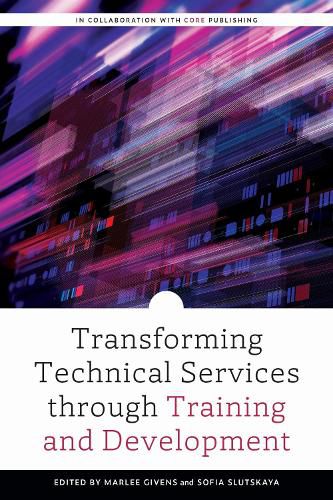
Technical services departments are increasingly expected to do more with less, which means that finding a balance between meeting service demands and developing staff knowledge and skills is more challenging than ever. Today’s next gen catalogs, changing cataloging rules, and diverse formats and delivery models demand that technical services professionals and paraprofessionals keep up with evolving best practices for the work they do. Fortunately, libraries can adopt methods such as Training Within Industry (TWI), lean management, and instructional design methodologies to develop a learning culture that continuously improves service delivery. Using case studies, this collection showcases a variety of creative and practical training development and organizational strategies that libraries and consortia have used to tackle issues related to skills gaps, remote work, student worker turnover, reorganizations, technology migrations, and more. You will learn about
techniques for establishing a positive training and learning culture; project management tools and business methodologies such as a Deming approach and just-in-time training for continuous improvement and staff skill development; reactive and proactive approaches in the training program for the University of Nevada, Las Vegas Acquisitions Unit; how the University of Toronto Libraries (UTL) harnessed the power of remote work to undertake a library services platform migration during the pandemic; applying concepts from information literacy instruction to e-resources training; reinventing student worker training; collaborative initiatives such as cross-organizational learning through Community of Practice (CoP); assessing metadata competencies by transforming records for a multi-system migration in an academic library at a R1 research university; and how staff training and documentation eased a library system’s transition from Voyager to Alma.
$9.00 standard shipping within Australia
FREE standard shipping within Australia for orders over $100.00
Express & International shipping calculated at checkout
Stock availability can be subject to change without notice. We recommend calling the shop or contacting our online team to check availability of low stock items. Please see our Shopping Online page for more details.
This title is printed to order. This book may have been self-published. If so, we cannot guarantee the quality of the content. In the main most books will have gone through the editing process however some may not. We therefore suggest that you be aware of this before ordering this book. If in doubt check either the author or publisher’s details as we are unable to accept any returns unless they are faulty. Please contact us if you have any questions.
Technical services departments are increasingly expected to do more with less, which means that finding a balance between meeting service demands and developing staff knowledge and skills is more challenging than ever. Today’s next gen catalogs, changing cataloging rules, and diverse formats and delivery models demand that technical services professionals and paraprofessionals keep up with evolving best practices for the work they do. Fortunately, libraries can adopt methods such as Training Within Industry (TWI), lean management, and instructional design methodologies to develop a learning culture that continuously improves service delivery. Using case studies, this collection showcases a variety of creative and practical training development and organizational strategies that libraries and consortia have used to tackle issues related to skills gaps, remote work, student worker turnover, reorganizations, technology migrations, and more. You will learn about
techniques for establishing a positive training and learning culture; project management tools and business methodologies such as a Deming approach and just-in-time training for continuous improvement and staff skill development; reactive and proactive approaches in the training program for the University of Nevada, Las Vegas Acquisitions Unit; how the University of Toronto Libraries (UTL) harnessed the power of remote work to undertake a library services platform migration during the pandemic; applying concepts from information literacy instruction to e-resources training; reinventing student worker training; collaborative initiatives such as cross-organizational learning through Community of Practice (CoP); assessing metadata competencies by transforming records for a multi-system migration in an academic library at a R1 research university; and how staff training and documentation eased a library system’s transition from Voyager to Alma.
Search our extensive online catalogue.
