Readings Newsletter
Become a Readings Member to make your shopping experience even easier.
Sign in or sign up for free!
You’re not far away from qualifying for FREE standard shipping within Australia
You’ve qualified for FREE standard shipping within Australia
The cart is loading…


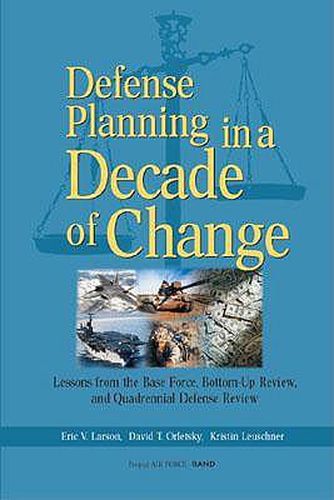
One liner: Each of the three defense reviews of the last decade fell short of fully apprehending the demands of the emerging threat environment, and the budgets that would be needed and afforded, resulting in a growing imbalance between strategy, forces, and resources over the decade. The end of the Cold War ushered in an era of profound change in the international arena and hence in the policymaking environment as well. Yet the changes that have characterized the post-Cold War era have often proceeded at different paces and have at times moved in opposing directions, placing unprecedented strain on policymakers seeking to shape a new national security and military strategy. This report describes the challenges policymakers have faced as seen through the lens of the three major force structure reviews that have taken place over the past decade; the 1990 Base Force, the 1993 Bottom-Up Review, and the 1997 Quadrennial Defense Review. The report focuses on the assumptions, decisions, and outcomes associated with these reviews as well as the planning and execution of each. It concludes that all three reviews fell short of fully apprehending the demands of the emerging threat environment, and the budgets that would be needed and afforded, resulting in a growing imbalance between strategy, forces, and resources over the decade. Accordingly, the report recommends that future defense planners adopt an assumption-based approach in which key planning assumptions are continually reassessed with a view toward recognizing–and rapidly responding to–emerging gaps and shortfalls. [AF]
$9.00 standard shipping within Australia
FREE standard shipping within Australia for orders over $100.00
Express & International shipping calculated at checkout
Stock availability can be subject to change without notice. We recommend calling the shop or contacting our online team to check availability of low stock items. Please see our Shopping Online page for more details.
One liner: Each of the three defense reviews of the last decade fell short of fully apprehending the demands of the emerging threat environment, and the budgets that would be needed and afforded, resulting in a growing imbalance between strategy, forces, and resources over the decade. The end of the Cold War ushered in an era of profound change in the international arena and hence in the policymaking environment as well. Yet the changes that have characterized the post-Cold War era have often proceeded at different paces and have at times moved in opposing directions, placing unprecedented strain on policymakers seeking to shape a new national security and military strategy. This report describes the challenges policymakers have faced as seen through the lens of the three major force structure reviews that have taken place over the past decade; the 1990 Base Force, the 1993 Bottom-Up Review, and the 1997 Quadrennial Defense Review. The report focuses on the assumptions, decisions, and outcomes associated with these reviews as well as the planning and execution of each. It concludes that all three reviews fell short of fully apprehending the demands of the emerging threat environment, and the budgets that would be needed and afforded, resulting in a growing imbalance between strategy, forces, and resources over the decade. Accordingly, the report recommends that future defense planners adopt an assumption-based approach in which key planning assumptions are continually reassessed with a view toward recognizing–and rapidly responding to–emerging gaps and shortfalls. [AF]
Search our extensive online catalogue.
