Readings Newsletter
Become a Readings Member to make your shopping experience even easier.
Sign in or sign up for free!
You’re not far away from qualifying for FREE standard shipping within Australia
You’ve qualified for FREE standard shipping within Australia
The cart is loading…


This title is printed to order. This book may have been self-published. If so, we cannot guarantee the quality of the content. In the main most books will have gone through the editing process however some may not. We therefore suggest that you be aware of this before ordering this book. If in doubt check either the author or publisher’s details as we are unable to accept any returns unless they are faulty. Please contact us if you have any questions.
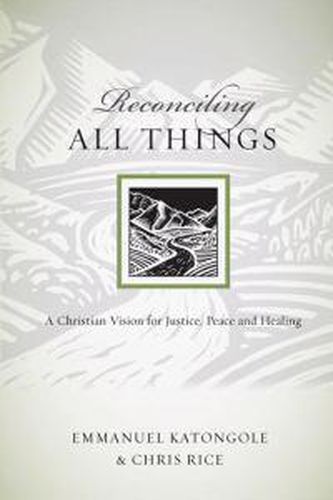
2009 Christianity Today Book Award winner! Our world is broken and cries out for reconciliation. But mere conflict resolution and peacemaking are not enough. What makes real reconciliation possible? How is it that some people are able to forgive the most horrendous of evils? And what role does God play in these stories? Does reconciliation make any sense apart from the biblical story of redemption? Secular models of peacemaking are insufficient. And the church has not always fulfilled its call to be agents of reconciliation in the world. In Reconciling All Things Emmanuel Katongole and Chris Rice, codirectors of the Center for Reconciliation at Duke Divinity School, cast a comprehensive vision for reconciliation that is biblical, transformative, holistic and global. They draw on the resources of the Christian story, including their own individual experiences in Uganda and Mississippi, to bring solid, theological reflection to bear on the work of reconciling individuals, groups and societies. They recover distinctively Christian practices that will help the church be both a sign and an agent of God’s reconciling love in the fragmented world of the twenty-first century. This powerful, concise book lays the philosophical foundations for the Resources for Reconciliation, a new series from InterVarsity Press and the Center for Reconciliation at Duke Divinity School which explores what it means to pursue hope in areas of brokenness in theory and practice.
$9.00 standard shipping within Australia
FREE standard shipping within Australia for orders over $100.00
Express & International shipping calculated at checkout
Stock availability can be subject to change without notice. We recommend calling the shop or contacting our online team to check availability of low stock items. Please see our Shopping Online page for more details.
This title is printed to order. This book may have been self-published. If so, we cannot guarantee the quality of the content. In the main most books will have gone through the editing process however some may not. We therefore suggest that you be aware of this before ordering this book. If in doubt check either the author or publisher’s details as we are unable to accept any returns unless they are faulty. Please contact us if you have any questions.
2009 Christianity Today Book Award winner! Our world is broken and cries out for reconciliation. But mere conflict resolution and peacemaking are not enough. What makes real reconciliation possible? How is it that some people are able to forgive the most horrendous of evils? And what role does God play in these stories? Does reconciliation make any sense apart from the biblical story of redemption? Secular models of peacemaking are insufficient. And the church has not always fulfilled its call to be agents of reconciliation in the world. In Reconciling All Things Emmanuel Katongole and Chris Rice, codirectors of the Center for Reconciliation at Duke Divinity School, cast a comprehensive vision for reconciliation that is biblical, transformative, holistic and global. They draw on the resources of the Christian story, including their own individual experiences in Uganda and Mississippi, to bring solid, theological reflection to bear on the work of reconciling individuals, groups and societies. They recover distinctively Christian practices that will help the church be both a sign and an agent of God’s reconciling love in the fragmented world of the twenty-first century. This powerful, concise book lays the philosophical foundations for the Resources for Reconciliation, a new series from InterVarsity Press and the Center for Reconciliation at Duke Divinity School which explores what it means to pursue hope in areas of brokenness in theory and practice.
Search our extensive online catalogue.
