Readings Newsletter
Become a Readings Member to make your shopping experience even easier.
Sign in or sign up for free!
You’re not far away from qualifying for FREE standard shipping within Australia
You’ve qualified for FREE standard shipping within Australia
The cart is loading…


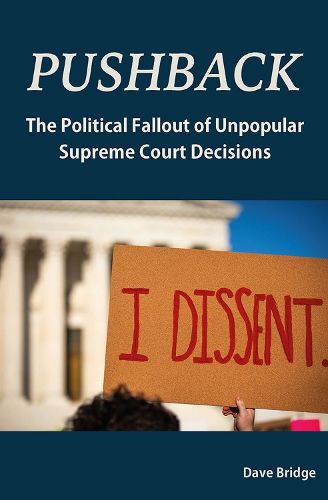
The Supreme Court has usually operated in majoritarian fashion but not always, and when it hasn't done so, the consequences of its decisions have had an extremely important impact on the Court, political parties, party formation, and politics in general.
In writing Pushback, an interdisciplinary book in an interdisciplinary series, Dave Bridge crosses methodological boundaries. Sometimes, the inquiry allows for procedural data collection with measurable observations (e.g., polls, number of congressional proposals, roll call tallies, breakdown of factional affiliations). At other times, he relies on historical narrative to describe complex stories that can only be told by attending to sequence, actors, institutions, and norms. The end result offers readers an innovative and highly accessible ways to think about the ways in which our constitutional democracy can push back against rare counter-majoritarian Supreme Court decisions.
$9.00 standard shipping within Australia
FREE standard shipping within Australia for orders over $100.00
Express & International shipping calculated at checkout
Stock availability can be subject to change without notice. We recommend calling the shop or contacting our online team to check availability of low stock items. Please see our Shopping Online page for more details.
The Supreme Court has usually operated in majoritarian fashion but not always, and when it hasn't done so, the consequences of its decisions have had an extremely important impact on the Court, political parties, party formation, and politics in general.
In writing Pushback, an interdisciplinary book in an interdisciplinary series, Dave Bridge crosses methodological boundaries. Sometimes, the inquiry allows for procedural data collection with measurable observations (e.g., polls, number of congressional proposals, roll call tallies, breakdown of factional affiliations). At other times, he relies on historical narrative to describe complex stories that can only be told by attending to sequence, actors, institutions, and norms. The end result offers readers an innovative and highly accessible ways to think about the ways in which our constitutional democracy can push back against rare counter-majoritarian Supreme Court decisions.
Search our extensive online catalogue.
