Readings Newsletter
Become a Readings Member to make your shopping experience even easier.
Sign in or sign up for free!
You’re not far away from qualifying for FREE standard shipping within Australia
You’ve qualified for FREE standard shipping within Australia
The cart is loading…


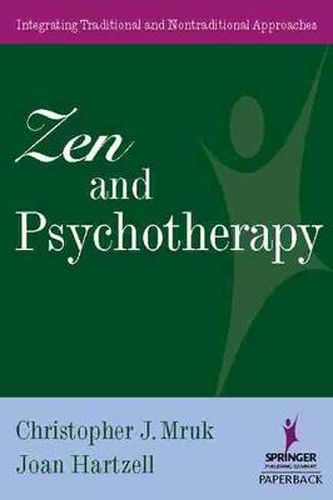
With over 80 years of combined experience in the mental health field, Mruk and Hartzell explore the role of spirituality and religion in treatment and provide a sound clinical and academic rationale for integrating principles of Zen and traditional psychotherapy. They offer help to clinicians, supervisors, and educators in understanding specific Zen principles that can hold significant therapeutic value, and how they are compatible with traditional, empirically oriented, scientifically based education and training, regardless of one’s particular academic or disciplinary orientation.
The authors, one a clinical educator and social scientist, the other a nurse psychotherapist and practicing Buddhist, present a fascinating dialogue on the science and the art sides of the art-science debate. This allows their different points of view to come together in both academic and personal communication, offering practical suggestions for achieving a balance between these two views on the helping and healing process.
$9.00 standard shipping within Australia
FREE standard shipping within Australia for orders over $100.00
Express & International shipping calculated at checkout
Stock availability can be subject to change without notice. We recommend calling the shop or contacting our online team to check availability of low stock items. Please see our Shopping Online page for more details.
With over 80 years of combined experience in the mental health field, Mruk and Hartzell explore the role of spirituality and religion in treatment and provide a sound clinical and academic rationale for integrating principles of Zen and traditional psychotherapy. They offer help to clinicians, supervisors, and educators in understanding specific Zen principles that can hold significant therapeutic value, and how they are compatible with traditional, empirically oriented, scientifically based education and training, regardless of one’s particular academic or disciplinary orientation.
The authors, one a clinical educator and social scientist, the other a nurse psychotherapist and practicing Buddhist, present a fascinating dialogue on the science and the art sides of the art-science debate. This allows their different points of view to come together in both academic and personal communication, offering practical suggestions for achieving a balance between these two views on the helping and healing process.
Search our extensive online catalogue.
