Readings Newsletter
Become a Readings Member to make your shopping experience even easier.
Sign in or sign up for free!
You’re not far away from qualifying for FREE standard shipping within Australia
You’ve qualified for FREE standard shipping within Australia
The cart is loading…


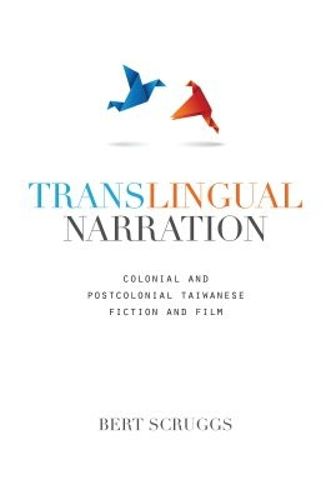
Translingual Narration is a study of colonial Taiwanese fiction, its translation from Japanese to Chinese, and films produced during and about the colonial era. It is a postcolonial intervention into a field largely dominated by studies of colonial Taiwanese writing as either a branch of Chinese fiction or part of a larger empire of Japanese language texts. Rather than read Taiwanese fiction as simply belonging to one of two discourses, the author argues for disengaging the nation from the former colony to better understand colonial Taiwan and its postcolonial critics.
Following early chapters on the identity politics behind Chinese translations of Japanese texts, attempts to establish a vernacular Taiwanese literature, and critical space, the author provides close readings of short fiction through the critical prisms of locative and cultural or ethnic identity to suggest that cultural identity is evidence of free will. Stories and novellas are also viewed through the critical prism of class-consciousness, including the writings of Yang Kui (1906-1985), who unlike most of his contemporaries wrote politically engaged literature. The author completes his core examination of identity by reading short fiction through the prism of gender identity and posits a resemblance between gender politics in colonial Taiwan and pre-independence India.
The work goes on to test the limits of nostalgia and solastalgia in fiction and film by looking at how both the colonial future and past are remembered before concluding with political uses of cinematic murder. Films considered in this chapter include colonial-era government propaganda documentaries and postcolonial representations of colonial cosmopolitanism and oppression. Finally, ideas borrowed from translation and memory studies as well as indigenization are suggested as possible avenues of discovery for continued interventions into the study of postcolonial and colonial Taiwanese fiction and culture.
With its insightful and informed analysis of the diverse nature of Taiwanese identity, Translingual Narration will engage a broad audience with interests in East Asian and postcolonial literature, film, history, and culture.
$9.00 standard shipping within Australia
FREE standard shipping within Australia for orders over $100.00
Express & International shipping calculated at checkout
Stock availability can be subject to change without notice. We recommend calling the shop or contacting our online team to check availability of low stock items. Please see our Shopping Online page for more details.
Translingual Narration is a study of colonial Taiwanese fiction, its translation from Japanese to Chinese, and films produced during and about the colonial era. It is a postcolonial intervention into a field largely dominated by studies of colonial Taiwanese writing as either a branch of Chinese fiction or part of a larger empire of Japanese language texts. Rather than read Taiwanese fiction as simply belonging to one of two discourses, the author argues for disengaging the nation from the former colony to better understand colonial Taiwan and its postcolonial critics.
Following early chapters on the identity politics behind Chinese translations of Japanese texts, attempts to establish a vernacular Taiwanese literature, and critical space, the author provides close readings of short fiction through the critical prisms of locative and cultural or ethnic identity to suggest that cultural identity is evidence of free will. Stories and novellas are also viewed through the critical prism of class-consciousness, including the writings of Yang Kui (1906-1985), who unlike most of his contemporaries wrote politically engaged literature. The author completes his core examination of identity by reading short fiction through the prism of gender identity and posits a resemblance between gender politics in colonial Taiwan and pre-independence India.
The work goes on to test the limits of nostalgia and solastalgia in fiction and film by looking at how both the colonial future and past are remembered before concluding with political uses of cinematic murder. Films considered in this chapter include colonial-era government propaganda documentaries and postcolonial representations of colonial cosmopolitanism and oppression. Finally, ideas borrowed from translation and memory studies as well as indigenization are suggested as possible avenues of discovery for continued interventions into the study of postcolonial and colonial Taiwanese fiction and culture.
With its insightful and informed analysis of the diverse nature of Taiwanese identity, Translingual Narration will engage a broad audience with interests in East Asian and postcolonial literature, film, history, and culture.
Search our extensive online catalogue.
