Readings Newsletter
Become a Readings Member to make your shopping experience even easier.
Sign in or sign up for free!
You’re not far away from qualifying for FREE standard shipping within Australia
You’ve qualified for FREE standard shipping within Australia
The cart is loading…


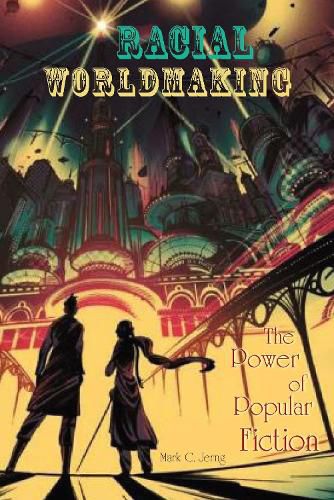
When does racial description become racism? Critical race studies has not come up with good answers to this question because it has overemphasized the visuality of race. According to dominant theories of racial formation, we see race on bodies and persons and then link those perceptions to unjust practices of racial inequality. Racial Worldmaking argues that we do not just see race. We are taught when, where, and how to notice race by a set of narrative and interpretive strategies. These strategies are named racial worldmaking because they get us to notice race not just at the level of the biological representation of bodies or the social categorization of persons. Rather, they get us to embed race into our expectations for how the world operates. As Mark C. Jerng shows us, these strategies find their most powerful expression in popular genre fiction: science fiction, romance, and fantasy.
Taking up the work of H.G. Wells, Margaret Mitchell, Samuel Delany, Philip K. Dick and others, Racial Worldmaking rethinks racial formation in relation to both African American and Asian American studies, as well as how scholars have addressed the relationships between literary representation and racial ideology. In doing so, it engages questions central to our current moment: In what ways do we participate in racist worlds, and how can we imagine and build one that is anti-racist?
$9.00 standard shipping within Australia
FREE standard shipping within Australia for orders over $100.00
Express & International shipping calculated at checkout
Stock availability can be subject to change without notice. We recommend calling the shop or contacting our online team to check availability of low stock items. Please see our Shopping Online page for more details.
When does racial description become racism? Critical race studies has not come up with good answers to this question because it has overemphasized the visuality of race. According to dominant theories of racial formation, we see race on bodies and persons and then link those perceptions to unjust practices of racial inequality. Racial Worldmaking argues that we do not just see race. We are taught when, where, and how to notice race by a set of narrative and interpretive strategies. These strategies are named racial worldmaking because they get us to notice race not just at the level of the biological representation of bodies or the social categorization of persons. Rather, they get us to embed race into our expectations for how the world operates. As Mark C. Jerng shows us, these strategies find their most powerful expression in popular genre fiction: science fiction, romance, and fantasy.
Taking up the work of H.G. Wells, Margaret Mitchell, Samuel Delany, Philip K. Dick and others, Racial Worldmaking rethinks racial formation in relation to both African American and Asian American studies, as well as how scholars have addressed the relationships between literary representation and racial ideology. In doing so, it engages questions central to our current moment: In what ways do we participate in racist worlds, and how can we imagine and build one that is anti-racist?
Search our extensive online catalogue.
