Readings Newsletter
Become a Readings Member to make your shopping experience even easier.
Sign in or sign up for free!
You’re not far away from qualifying for FREE standard shipping within Australia
You’ve qualified for FREE standard shipping within Australia
The cart is loading…


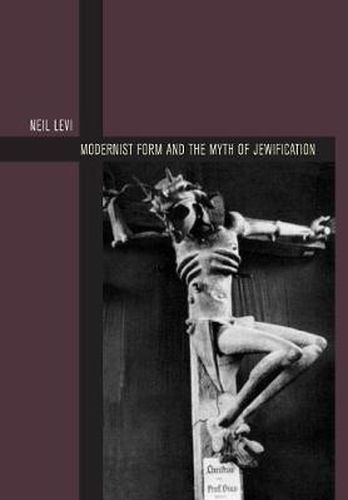
Why were modernist works of art, literature, and music that were neither by nor about Jews nevertheless interpreted as Jewish? In this book, Neil Levi explores how the antisemitic fantasy of a mobile, dangerous, contagious Jewish spirit unfolds in the antimodernist polemics of Richard Wagner, Max Nordau, Wyndham Lewis, and Louis-Ferdinand Celine, reaching its apotheosis in the notorious 1937 Nazi exhibition Degenerate Art. Levi then turns to James Joyce, Theodor W. Adorno, and Samuel Beckett, offering radical new interpretations of these modernist authors to show how each presents his own poetics as a self-conscious departure from the modern antisemitic imaginary.
Levi claims that, just as antisemites once feared their own contamination by a mobile, polluting Jewish spirit, so too much of postwar thought remains governed by the fear that it might be contaminated by the spirit of antisemitism. Thus he argues for the need to confront and work through our own fantasies and projections-not only about the figure of the Jew but also about that of the antisemite.
$9.00 standard shipping within Australia
FREE standard shipping within Australia for orders over $100.00
Express & International shipping calculated at checkout
Stock availability can be subject to change without notice. We recommend calling the shop or contacting our online team to check availability of low stock items. Please see our Shopping Online page for more details.
Why were modernist works of art, literature, and music that were neither by nor about Jews nevertheless interpreted as Jewish? In this book, Neil Levi explores how the antisemitic fantasy of a mobile, dangerous, contagious Jewish spirit unfolds in the antimodernist polemics of Richard Wagner, Max Nordau, Wyndham Lewis, and Louis-Ferdinand Celine, reaching its apotheosis in the notorious 1937 Nazi exhibition Degenerate Art. Levi then turns to James Joyce, Theodor W. Adorno, and Samuel Beckett, offering radical new interpretations of these modernist authors to show how each presents his own poetics as a self-conscious departure from the modern antisemitic imaginary.
Levi claims that, just as antisemites once feared their own contamination by a mobile, polluting Jewish spirit, so too much of postwar thought remains governed by the fear that it might be contaminated by the spirit of antisemitism. Thus he argues for the need to confront and work through our own fantasies and projections-not only about the figure of the Jew but also about that of the antisemite.
Search our extensive online catalogue.
