Readings Newsletter
Become a Readings Member to make your shopping experience even easier.
Sign in or sign up for free!
You’re not far away from qualifying for FREE standard shipping within Australia
You’ve qualified for FREE standard shipping within Australia
The cart is loading…


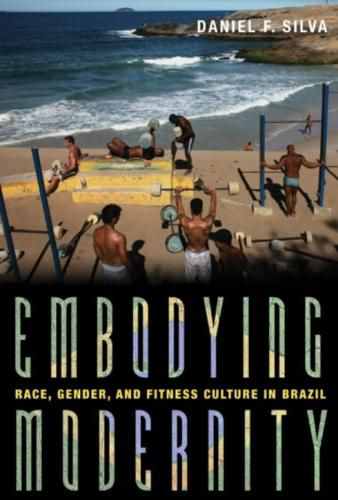
Since the late 20th-century, mainstream popular culture in Brazil has developed an intimate relationship with fitness culture - a vast, fluid, and pervasive network of images and commodities, bodies of knowledge, and discourses pertaining to idealised corporality and personhood.
Embodying Modernity works toward a conceptualisation of fitness culture, tracing its development and locating its broad existence in the contemporary Brazilian public sphere. Silva examines the role of fitness culture and the visualisation of ‘fit bodies’ within the history of western imperialism and its existing discourses of white supremacy, gender binarism, patriarchy, ableism, and heterosexism that continue to define Brazilian nationhood and power structures. Fitness culture in Brazil has developed within and through projects of national modernity and modernisation carried out by national elites looking to build a national population aligned with Eurocentric cultural practices and notions of normative bodies.
$9.00 standard shipping within Australia
FREE standard shipping within Australia for orders over $100.00
Express & International shipping calculated at checkout
Stock availability can be subject to change without notice. We recommend calling the shop or contacting our online team to check availability of low stock items. Please see our Shopping Online page for more details.
Since the late 20th-century, mainstream popular culture in Brazil has developed an intimate relationship with fitness culture - a vast, fluid, and pervasive network of images and commodities, bodies of knowledge, and discourses pertaining to idealised corporality and personhood.
Embodying Modernity works toward a conceptualisation of fitness culture, tracing its development and locating its broad existence in the contemporary Brazilian public sphere. Silva examines the role of fitness culture and the visualisation of ‘fit bodies’ within the history of western imperialism and its existing discourses of white supremacy, gender binarism, patriarchy, ableism, and heterosexism that continue to define Brazilian nationhood and power structures. Fitness culture in Brazil has developed within and through projects of national modernity and modernisation carried out by national elites looking to build a national population aligned with Eurocentric cultural practices and notions of normative bodies.
Search our extensive online catalogue.
