Readings Newsletter
Become a Readings Member to make your shopping experience even easier.
Sign in or sign up for free!
You’re not far away from qualifying for FREE standard shipping within Australia
You’ve qualified for FREE standard shipping within Australia
The cart is loading…


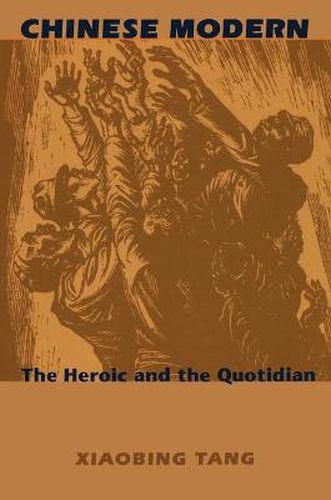
An examination of crucial episodes in the creation of Chinese modernity during the turbulent 20th century. Analyzing an array of literary, visual, theatrical and cinematic texts, Xiaobing Tang portrays the cultural transformation of China from the early 1900s through to the founding of the People’s Republic, the installation of the socialist realist aesthetic, the collapse of the idea of utopia in the aftermath of the Cultural Revolution, and the gradual cannibalisation of the socialist past by consumer culture at the century’s end. Throughout, he highlights the dynamic tension created between everyday life and the heroic ideal. Texts addressed include Wu Jianren’s 1906 novel The Sea of Regret and works by canonical writers Lu Xun, Ding Ling, and Ba Jin. Tang includes a discussion of the 1963 play The Young Generation and closes with an examination of post-Cultural Revolution nostalgia for the passion of the lyrical age. Throughout this work, the author suggests a historical and imaginative affinity between apparently separate literatures and cultures. He thus illuminates not only Chinese modernity but also the condition of modernity as a whole, particularly in the light of the post-modern recognition that the market and commodity culture are both angel and devil.
$9.00 standard shipping within Australia
FREE standard shipping within Australia for orders over $100.00
Express & International shipping calculated at checkout
Stock availability can be subject to change without notice. We recommend calling the shop or contacting our online team to check availability of low stock items. Please see our Shopping Online page for more details.
An examination of crucial episodes in the creation of Chinese modernity during the turbulent 20th century. Analyzing an array of literary, visual, theatrical and cinematic texts, Xiaobing Tang portrays the cultural transformation of China from the early 1900s through to the founding of the People’s Republic, the installation of the socialist realist aesthetic, the collapse of the idea of utopia in the aftermath of the Cultural Revolution, and the gradual cannibalisation of the socialist past by consumer culture at the century’s end. Throughout, he highlights the dynamic tension created between everyday life and the heroic ideal. Texts addressed include Wu Jianren’s 1906 novel The Sea of Regret and works by canonical writers Lu Xun, Ding Ling, and Ba Jin. Tang includes a discussion of the 1963 play The Young Generation and closes with an examination of post-Cultural Revolution nostalgia for the passion of the lyrical age. Throughout this work, the author suggests a historical and imaginative affinity between apparently separate literatures and cultures. He thus illuminates not only Chinese modernity but also the condition of modernity as a whole, particularly in the light of the post-modern recognition that the market and commodity culture are both angel and devil.
Search our extensive online catalogue.
