Readings Newsletter
Become a Readings Member to make your shopping experience even easier.
Sign in or sign up for free!
You’re not far away from qualifying for FREE standard shipping within Australia
You’ve qualified for FREE standard shipping within Australia
The cart is loading…


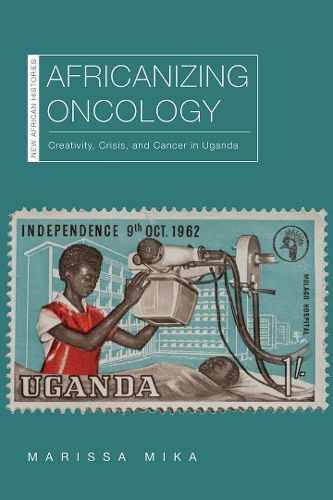
An innovative contemporary history that blends insights from a variety of disciplines to highlight how a storied African cancer institute has shaped lives and identities in postcolonial Uganda.
Over the past decade, an increasingly visible crisis of cancer in Uganda has made local and international headlines. Based on transcontinental research and public engagement with the Uganda Cancer Institute that began in 2010, Africanizing Oncology frames the cancer hospital as a microcosm of the Ugandan state, as a space where one can trace the lived experiences of Ugandans in the twentieth century. Ongoing ethnographic fieldwork, patient records, oral histories, private papers from US oncologists, American National Cancer Institute records, British colonial office reports, and even the architecture of the institute itself show how Ugandans understood and continue to shape ideas about national identity, political violence, epidemics, and economic life.
Africanizing Oncology describes the political, social, technological, and biomedical dimensions of how Ugandans created, sustained, and transformed this institute over the past half century. With insights from science and technology studies and contemporary African history, Marissa Mika’s work joins a new wave of contemporary histories of the political, technological, moral, and intellectual aspirations and actions of Africans after independence. It contributes to a growing body of work on chronic disease and situates the contemporary urgency of the mounting cancer crisis on the continent in a longer history of global cancer research and care. With its creative integration of African studies, science and technology studies, and medical anthropology, Africanizing Oncology speaks to multiple scholarly communities.
$9.00 standard shipping within Australia
FREE standard shipping within Australia for orders over $100.00
Express & International shipping calculated at checkout
Stock availability can be subject to change without notice. We recommend calling the shop or contacting our online team to check availability of low stock items. Please see our Shopping Online page for more details.
An innovative contemporary history that blends insights from a variety of disciplines to highlight how a storied African cancer institute has shaped lives and identities in postcolonial Uganda.
Over the past decade, an increasingly visible crisis of cancer in Uganda has made local and international headlines. Based on transcontinental research and public engagement with the Uganda Cancer Institute that began in 2010, Africanizing Oncology frames the cancer hospital as a microcosm of the Ugandan state, as a space where one can trace the lived experiences of Ugandans in the twentieth century. Ongoing ethnographic fieldwork, patient records, oral histories, private papers from US oncologists, American National Cancer Institute records, British colonial office reports, and even the architecture of the institute itself show how Ugandans understood and continue to shape ideas about national identity, political violence, epidemics, and economic life.
Africanizing Oncology describes the political, social, technological, and biomedical dimensions of how Ugandans created, sustained, and transformed this institute over the past half century. With insights from science and technology studies and contemporary African history, Marissa Mika’s work joins a new wave of contemporary histories of the political, technological, moral, and intellectual aspirations and actions of Africans after independence. It contributes to a growing body of work on chronic disease and situates the contemporary urgency of the mounting cancer crisis on the continent in a longer history of global cancer research and care. With its creative integration of African studies, science and technology studies, and medical anthropology, Africanizing Oncology speaks to multiple scholarly communities.
Search our extensive online catalogue.
