Readings Newsletter
Become a Readings Member to make your shopping experience even easier.
Sign in or sign up for free!
You’re not far away from qualifying for FREE standard shipping within Australia
You’ve qualified for FREE standard shipping within Australia
The cart is loading…


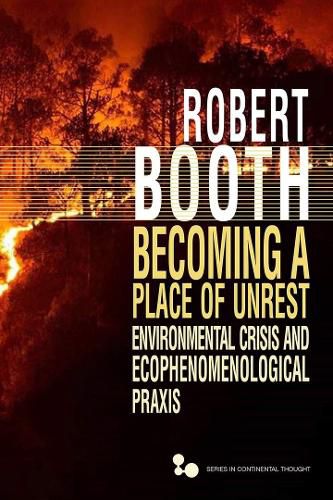
The key to mitigating the environmental crisis isn’t just based on science; it depends upon a profound philosophical revision of how we think about and behave in relation to the world.
Our ongoing failure to interrupt the environmental crisis in a meaningful way stems, in part, from how we perceive the environment–what Robert Booth calls the more-than-human world. Anthropocentric presumptions of this world, inherited from natural science, have led us to better scientific knowledge about environmental problems and more science-based–yet inadequate–practical solutions. That’s not enough, Booth argues. Rather, he asserts that we must critically and self-reflexively revise how we perceive and consider ourselves within the more-than-human world as a matter of praxis in order to arrest our destructive impact on it.
Across six chapters, Booth brings ecophenomenology–environmentally focused phenomenology–into productive dialogue with a rich array of other philosophical approaches, such as ecofeminism, new materialism, speculative realism, and object-oriented ontology. The book thus outlines and justifies why and how a specifically ecophenomenological praxis may lead to the disruption of the environmental crisis at its root.
Booth’s observations and arguments make the leap from theory to practice insofar as they may influence how we fundamentally grasp the environmental crisis and what promising avenues of practical activism might look like. In Booth’s view, this is not about achieving a global scientific consensus regarding the material causes of the environmental crisis or the responsible use of natural resources. Instead, Booth calls for us to habitually resist our impetus to uncritically reduce more-than-human entities to natural resources in the first place.
As Booth recognizes, Becoming a Place of Unrest cannot and does not tell us how we should act. Instead, it outlines and provides the basic means by which to instill positive and responsible conceptual and behavioral relationships with the rest of the world. Based on this, there is hope that we may begin to develop more concrete, actionable policies that bring about profound and lasting change.
$9.00 standard shipping within Australia
FREE standard shipping within Australia for orders over $100.00
Express & International shipping calculated at checkout
Stock availability can be subject to change without notice. We recommend calling the shop or contacting our online team to check availability of low stock items. Please see our Shopping Online page for more details.
The key to mitigating the environmental crisis isn’t just based on science; it depends upon a profound philosophical revision of how we think about and behave in relation to the world.
Our ongoing failure to interrupt the environmental crisis in a meaningful way stems, in part, from how we perceive the environment–what Robert Booth calls the more-than-human world. Anthropocentric presumptions of this world, inherited from natural science, have led us to better scientific knowledge about environmental problems and more science-based–yet inadequate–practical solutions. That’s not enough, Booth argues. Rather, he asserts that we must critically and self-reflexively revise how we perceive and consider ourselves within the more-than-human world as a matter of praxis in order to arrest our destructive impact on it.
Across six chapters, Booth brings ecophenomenology–environmentally focused phenomenology–into productive dialogue with a rich array of other philosophical approaches, such as ecofeminism, new materialism, speculative realism, and object-oriented ontology. The book thus outlines and justifies why and how a specifically ecophenomenological praxis may lead to the disruption of the environmental crisis at its root.
Booth’s observations and arguments make the leap from theory to practice insofar as they may influence how we fundamentally grasp the environmental crisis and what promising avenues of practical activism might look like. In Booth’s view, this is not about achieving a global scientific consensus regarding the material causes of the environmental crisis or the responsible use of natural resources. Instead, Booth calls for us to habitually resist our impetus to uncritically reduce more-than-human entities to natural resources in the first place.
As Booth recognizes, Becoming a Place of Unrest cannot and does not tell us how we should act. Instead, it outlines and provides the basic means by which to instill positive and responsible conceptual and behavioral relationships with the rest of the world. Based on this, there is hope that we may begin to develop more concrete, actionable policies that bring about profound and lasting change.
Search our extensive online catalogue.
