Readings Newsletter
Become a Readings Member to make your shopping experience even easier.
Sign in or sign up for free!
You’re not far away from qualifying for FREE standard shipping within Australia
You’ve qualified for FREE standard shipping within Australia
The cart is loading…


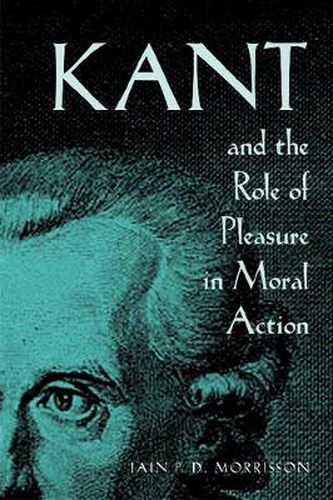
Kant scholars since the early nineteenth century have disa-greed about how to interpret his theory of moral motivation. Kant tells us that the feeling of respect is the incentive to moral action, but he is notoriously ambiguous on the question of what exactly this means. In Kant and the Role of Pleasure in Moral Action, Iain Morrisson offers a new view on Kant\u2019s theory of moral action. In a clear, straightforward style, Morrisson responds to the ongoing interpretive stalemate by taking an original approach to the problem. Whereas previous commentators have attempted to understand Kant\u2019s feeling of respect by studying the relevant textual evidence in isolation, Morrisson illuminates this evidence by determining what Kant\u2019s more general theory of action commits him to regarding moral action. After looking at how Kant\u2019s treatment of desire and feeling can be reconciled with his famous account of free maxim-based action, Morrisson argues that respect moves us to moral action in a way that is structurally parallel to the way in which nonmoral pleasure motivates nonmoral action. In reconstructing a unified theory of action in Kant, Morrisson integrates a number of distinct elements in his practical philosophy. Kant and the Role of Pleasure in Moral Action is part of a new wave of interest in Kant\u2019s anthropological (that is, psychological) works.
$9.00 standard shipping within Australia
FREE standard shipping within Australia for orders over $100.00
Express & International shipping calculated at checkout
Stock availability can be subject to change without notice. We recommend calling the shop or contacting our online team to check availability of low stock items. Please see our Shopping Online page for more details.
Kant scholars since the early nineteenth century have disa-greed about how to interpret his theory of moral motivation. Kant tells us that the feeling of respect is the incentive to moral action, but he is notoriously ambiguous on the question of what exactly this means. In Kant and the Role of Pleasure in Moral Action, Iain Morrisson offers a new view on Kant\u2019s theory of moral action. In a clear, straightforward style, Morrisson responds to the ongoing interpretive stalemate by taking an original approach to the problem. Whereas previous commentators have attempted to understand Kant\u2019s feeling of respect by studying the relevant textual evidence in isolation, Morrisson illuminates this evidence by determining what Kant\u2019s more general theory of action commits him to regarding moral action. After looking at how Kant\u2019s treatment of desire and feeling can be reconciled with his famous account of free maxim-based action, Morrisson argues that respect moves us to moral action in a way that is structurally parallel to the way in which nonmoral pleasure motivates nonmoral action. In reconstructing a unified theory of action in Kant, Morrisson integrates a number of distinct elements in his practical philosophy. Kant and the Role of Pleasure in Moral Action is part of a new wave of interest in Kant\u2019s anthropological (that is, psychological) works.
Search our extensive online catalogue.
