Readings Newsletter
Become a Readings Member to make your shopping experience even easier.
Sign in or sign up for free!
You’re not far away from qualifying for FREE standard shipping within Australia
You’ve qualified for FREE standard shipping within Australia
The cart is loading…


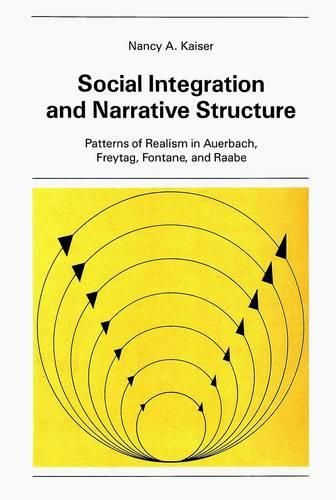
Defining realism as a category of literary communication, this study delineates three distinct patterns of reader experience within 19th-century German Realism. In considering the interaction of text and reader as constructing the world which a realistic novel is often said to reflect or describe, the author coordinates an analysis of the social systems constituted within the texts with a consideration of the narrative structure. The first pattern connects village tales by Auerbach with Freytag’s Soll und Haben. A second pattern of reader experience, demonstrated in three novels by Fontane, exposes and manipulates the mechanisms of social integration. The final pattern, two works from Raabe’s Braunschweig Trilogy, undermines the middle-class reality it evokes.
$9.00 standard shipping within Australia
FREE standard shipping within Australia for orders over $100.00
Express & International shipping calculated at checkout
Stock availability can be subject to change without notice. We recommend calling the shop or contacting our online team to check availability of low stock items. Please see our Shopping Online page for more details.
Defining realism as a category of literary communication, this study delineates three distinct patterns of reader experience within 19th-century German Realism. In considering the interaction of text and reader as constructing the world which a realistic novel is often said to reflect or describe, the author coordinates an analysis of the social systems constituted within the texts with a consideration of the narrative structure. The first pattern connects village tales by Auerbach with Freytag’s Soll und Haben. A second pattern of reader experience, demonstrated in three novels by Fontane, exposes and manipulates the mechanisms of social integration. The final pattern, two works from Raabe’s Braunschweig Trilogy, undermines the middle-class reality it evokes.
Search our extensive online catalogue.
