Readings Newsletter
Become a Readings Member to make your shopping experience even easier.
Sign in or sign up for free!
You’re not far away from qualifying for FREE standard shipping within Australia
You’ve qualified for FREE standard shipping within Australia
The cart is loading…


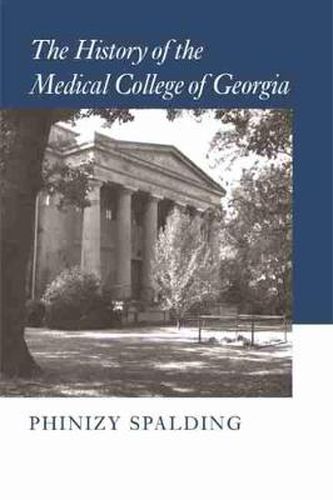
Phinizy Spalding traces the development of Georgia’s oldest medical school from the initial plans of a small group of physicians to the five school complex found in Augusta in the late 1980s. Charting a course filled with great achievement and near-fatal adversity, Spalding shows how the life of the college has been intimately bound to the local community, state politics, and the national medical establishment.
When the Medical Academy of Georgia opened its doors in 1828 to a class of seven students, the total number of degreed physicians in the state was fewer than one hundred. Spalding traces the history of the Academy through its early robust growth in the antebellum years; its slowed progress during the Civil War; its decline and hardships during the early half of the twentieth century; and finally its resurgence and a new era of optimism starting in the 1950s.
$9.00 standard shipping within Australia
FREE standard shipping within Australia for orders over $100.00
Express & International shipping calculated at checkout
Stock availability can be subject to change without notice. We recommend calling the shop or contacting our online team to check availability of low stock items. Please see our Shopping Online page for more details.
Phinizy Spalding traces the development of Georgia’s oldest medical school from the initial plans of a small group of physicians to the five school complex found in Augusta in the late 1980s. Charting a course filled with great achievement and near-fatal adversity, Spalding shows how the life of the college has been intimately bound to the local community, state politics, and the national medical establishment.
When the Medical Academy of Georgia opened its doors in 1828 to a class of seven students, the total number of degreed physicians in the state was fewer than one hundred. Spalding traces the history of the Academy through its early robust growth in the antebellum years; its slowed progress during the Civil War; its decline and hardships during the early half of the twentieth century; and finally its resurgence and a new era of optimism starting in the 1950s.
Search our extensive online catalogue.
