Readings Newsletter
Become a Readings Member to make your shopping experience even easier.
Sign in or sign up for free!
You’re not far away from qualifying for FREE standard shipping within Australia
You’ve qualified for FREE standard shipping within Australia
The cart is loading…


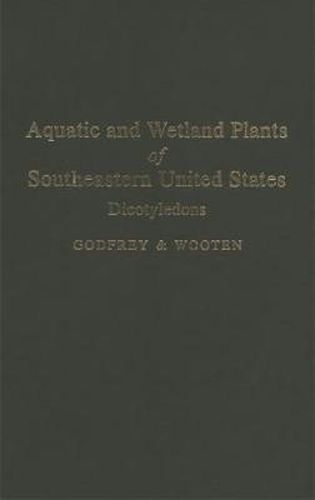
This is the long-awaited second volume of Godfrey and Wooten’s definitive survey of aquatic and wetland plants of the southeastern United States. It focuses on native and naturalized dicotyledons of the region and provides well-written, concise descriptions and keys for the identification of 1,084 species. A glossary of terms, list of references, separate indexes of common and scientific names, and nearly 400 well-executed drawings complete the volume.
The first comprehensive survey of the aquatic and wetland plants of the Southeast, the Godfrey and Wooten volumes will prove invaluable to botanists, ecologists, college students, government agencies involved in land-use management, and nonspecialists interested in the plant life and ecology of the region.
$9.00 standard shipping within Australia
FREE standard shipping within Australia for orders over $100.00
Express & International shipping calculated at checkout
Stock availability can be subject to change without notice. We recommend calling the shop or contacting our online team to check availability of low stock items. Please see our Shopping Online page for more details.
This is the long-awaited second volume of Godfrey and Wooten’s definitive survey of aquatic and wetland plants of the southeastern United States. It focuses on native and naturalized dicotyledons of the region and provides well-written, concise descriptions and keys for the identification of 1,084 species. A glossary of terms, list of references, separate indexes of common and scientific names, and nearly 400 well-executed drawings complete the volume.
The first comprehensive survey of the aquatic and wetland plants of the Southeast, the Godfrey and Wooten volumes will prove invaluable to botanists, ecologists, college students, government agencies involved in land-use management, and nonspecialists interested in the plant life and ecology of the region.
Search our extensive online catalogue.
