Readings Newsletter
Become a Readings Member to make your shopping experience even easier.
Sign in or sign up for free!
You’re not far away from qualifying for FREE standard shipping within Australia
You’ve qualified for FREE standard shipping within Australia
The cart is loading…


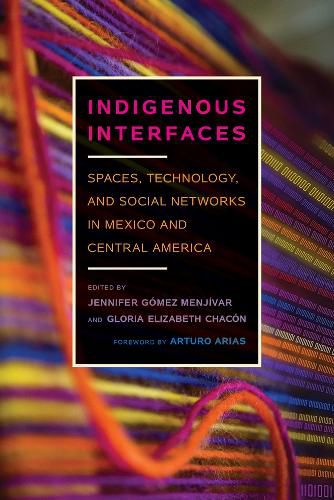
Cultural preservation, linguistic revitalization, intellectual heritage, and environmental sustainability became central to Indigenous movements in Mexico and Central America after 1992. While the emergence of these issues triggered important conversations, none to date have examined the role that new media has played in accomplishing their objectives.
Indigenous Interfaces provides the first thorough examination of indigeneity at the interface of cyberspace. Correspondingly, it examines the impact of new media on the struggles for self-determination that Indigenous peoples undergo in Mexico and Central America. The volume’s contributors highlight the fresh approaches that Mesoamerica’s Indigenous peoples have given to new media-from YouTubing Maya rock music to hashtagging in Zapotec. Together, they argue that these cyberspatial activities both maintain tradition and ensure its continuity. Without considering the implications of new technologies, Indigenous Interfaces argues, twenty-first-century indigeneity in Mexico and Central America cannot be successfully documented, evaluated, and comprehended.
Indigenous Interfaces rejects the myth that indigeneity and information technology are incompatible through its compelling analysis of the relationships between Indigenous peoples and new media. The volume illustrates how Indigenous peoples are selectively and strategically choosing to interface with cybertechnology, highlights Indigenous interpretations of new media, and brings to center Indigenous communities who are resetting modes of communication and redirecting the flow of information. It convincingly argues that interfacing with traditional technologies simultaneously with new media gives Indigenous peoples an edge on the claim to autonomous and sovereign ways of being Indigenous in the twenty-first century.
Contributors: Arturo Arias, Debra A. Castillo, Gloria Elizabeth Chacon, Adam W. Coon, Emiliana Cruz, Tajeew Diaz Robles, Mauricio Espinoza, Alicia Ivonne Estrada, Jennifer Gomez Menjivar, Sue P. Haglund, Brook Danielle Lillehaugen, Paul Joseph Lopez Oro, Rita M. Palacios, Gabriela Spears-Rico, Paul Worley.
$9.00 standard shipping within Australia
FREE standard shipping within Australia for orders over $100.00
Express & International shipping calculated at checkout
Stock availability can be subject to change without notice. We recommend calling the shop or contacting our online team to check availability of low stock items. Please see our Shopping Online page for more details.
Cultural preservation, linguistic revitalization, intellectual heritage, and environmental sustainability became central to Indigenous movements in Mexico and Central America after 1992. While the emergence of these issues triggered important conversations, none to date have examined the role that new media has played in accomplishing their objectives.
Indigenous Interfaces provides the first thorough examination of indigeneity at the interface of cyberspace. Correspondingly, it examines the impact of new media on the struggles for self-determination that Indigenous peoples undergo in Mexico and Central America. The volume’s contributors highlight the fresh approaches that Mesoamerica’s Indigenous peoples have given to new media-from YouTubing Maya rock music to hashtagging in Zapotec. Together, they argue that these cyberspatial activities both maintain tradition and ensure its continuity. Without considering the implications of new technologies, Indigenous Interfaces argues, twenty-first-century indigeneity in Mexico and Central America cannot be successfully documented, evaluated, and comprehended.
Indigenous Interfaces rejects the myth that indigeneity and information technology are incompatible through its compelling analysis of the relationships between Indigenous peoples and new media. The volume illustrates how Indigenous peoples are selectively and strategically choosing to interface with cybertechnology, highlights Indigenous interpretations of new media, and brings to center Indigenous communities who are resetting modes of communication and redirecting the flow of information. It convincingly argues that interfacing with traditional technologies simultaneously with new media gives Indigenous peoples an edge on the claim to autonomous and sovereign ways of being Indigenous in the twenty-first century.
Contributors: Arturo Arias, Debra A. Castillo, Gloria Elizabeth Chacon, Adam W. Coon, Emiliana Cruz, Tajeew Diaz Robles, Mauricio Espinoza, Alicia Ivonne Estrada, Jennifer Gomez Menjivar, Sue P. Haglund, Brook Danielle Lillehaugen, Paul Joseph Lopez Oro, Rita M. Palacios, Gabriela Spears-Rico, Paul Worley.
Search our extensive online catalogue.
