Readings Newsletter
Become a Readings Member to make your shopping experience even easier.
Sign in or sign up for free!
You’re not far away from qualifying for FREE standard shipping within Australia
You’ve qualified for FREE standard shipping within Australia
The cart is loading…


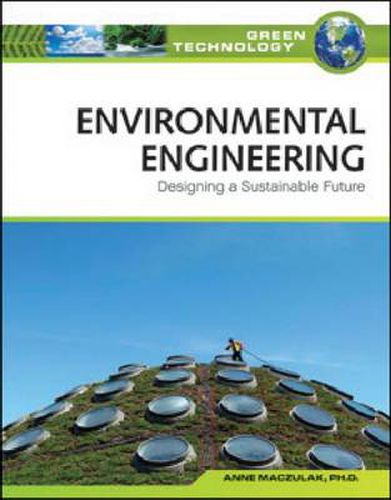
Environmental engineering’s future seems boundless because it is based in the myriad ways in which nature solves its own engineering challenges. People have yet to design a system that pumps water 200 feet straight up toward the sky in a system that is silent, requires no mechanical pumps, and never malfunctions, yet giant sequoia trees do this every day. Environmental engineering has a distance to go to mimic nature’s activities, but fortunately, nature provides endless examples of processes like the sequoias’ that maximize energy conservation. Environmental engineering represents a discipline that will be required for almost all future technologies in energy conservation. Featuring full-color photographs and line illustrations, this new book shows how some engineering projects turn out to be quite complex endeavors, while a good number draw on the simplicity of natural systems by following nature’s theme of ‘less is more’. It also discusses the ways in which environmental engineering blends the best aspects of art and design with the sciences of physics, geology, ecology, and the chemistry of matter. Chapters include: New Directions in Civil Engineering; Designing Transit Systems; Innovations in Personal Vehicles; Sustainable Manufacturing; Energy Efficient Electronics; Ecological Landscape Design; and, Sustainable Wastewater Treatment.
$9.00 standard shipping within Australia
FREE standard shipping within Australia for orders over $100.00
Express & International shipping calculated at checkout
Stock availability can be subject to change without notice. We recommend calling the shop or contacting our online team to check availability of low stock items. Please see our Shopping Online page for more details.
Environmental engineering’s future seems boundless because it is based in the myriad ways in which nature solves its own engineering challenges. People have yet to design a system that pumps water 200 feet straight up toward the sky in a system that is silent, requires no mechanical pumps, and never malfunctions, yet giant sequoia trees do this every day. Environmental engineering has a distance to go to mimic nature’s activities, but fortunately, nature provides endless examples of processes like the sequoias’ that maximize energy conservation. Environmental engineering represents a discipline that will be required for almost all future technologies in energy conservation. Featuring full-color photographs and line illustrations, this new book shows how some engineering projects turn out to be quite complex endeavors, while a good number draw on the simplicity of natural systems by following nature’s theme of ‘less is more’. It also discusses the ways in which environmental engineering blends the best aspects of art and design with the sciences of physics, geology, ecology, and the chemistry of matter. Chapters include: New Directions in Civil Engineering; Designing Transit Systems; Innovations in Personal Vehicles; Sustainable Manufacturing; Energy Efficient Electronics; Ecological Landscape Design; and, Sustainable Wastewater Treatment.
Search our extensive online catalogue.
