Readings Newsletter
Become a Readings Member to make your shopping experience even easier.
Sign in or sign up for free!
You’re not far away from qualifying for FREE standard shipping within Australia
You’ve qualified for FREE standard shipping within Australia
The cart is loading…


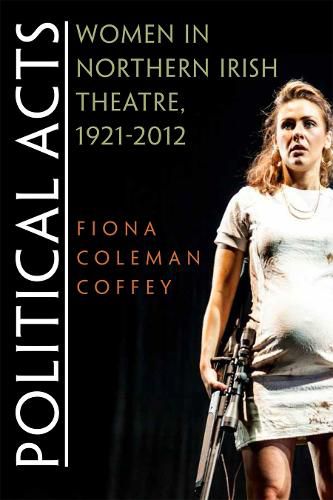
Since the establishment of the Northern Irish state in 1921, theatre has often captured and reflected the political, social, and cultural changes that the North has experienced. From the mid-twentieth century, theatre has played a particularly important role in documenting women’s experiences and in showing how women’s social and political status has changed with the transformation of the state. Throughout the North’s history, women’s dramatic writing and performance have often contradicted mainstream narratives of the sectarian conflict, creating a rich and daring trove of counternarratives that contest the stories promoted by the government and media.
Moving beyond the better-known women theatre practitioners of the North such as Marie Jones, Christina Reid, Anne Devlin, and the Charabanc Theatre Company, Coffey recovers the lost history of lesser-known, early playwrightsand highlights a new generation of women writing during peacetime. She examines how Northern women have historically used the theatrical stage as a form of political activism when more traditional avenues were closed off to them. Tracing the development of women’s involvement in Northern theatre, Coffey ultimately illuminates how issues such as feminism, gender roles, violence,politics, and sectarianism have shifted over the past century as the North moves from conflict into a developing and fragile peace.
$9.00 standard shipping within Australia
FREE standard shipping within Australia for orders over $100.00
Express & International shipping calculated at checkout
Stock availability can be subject to change without notice. We recommend calling the shop or contacting our online team to check availability of low stock items. Please see our Shopping Online page for more details.
Since the establishment of the Northern Irish state in 1921, theatre has often captured and reflected the political, social, and cultural changes that the North has experienced. From the mid-twentieth century, theatre has played a particularly important role in documenting women’s experiences and in showing how women’s social and political status has changed with the transformation of the state. Throughout the North’s history, women’s dramatic writing and performance have often contradicted mainstream narratives of the sectarian conflict, creating a rich and daring trove of counternarratives that contest the stories promoted by the government and media.
Moving beyond the better-known women theatre practitioners of the North such as Marie Jones, Christina Reid, Anne Devlin, and the Charabanc Theatre Company, Coffey recovers the lost history of lesser-known, early playwrightsand highlights a new generation of women writing during peacetime. She examines how Northern women have historically used the theatrical stage as a form of political activism when more traditional avenues were closed off to them. Tracing the development of women’s involvement in Northern theatre, Coffey ultimately illuminates how issues such as feminism, gender roles, violence,politics, and sectarianism have shifted over the past century as the North moves from conflict into a developing and fragile peace.
Search our extensive online catalogue.
