Readings Newsletter
Become a Readings Member to make your shopping experience even easier.
Sign in or sign up for free!
You’re not far away from qualifying for FREE standard shipping within Australia
You’ve qualified for FREE standard shipping within Australia
The cart is loading…


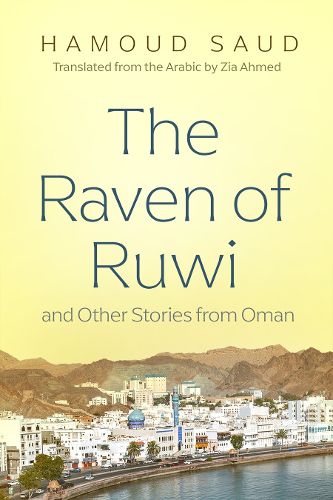
In this lyrical collection, Omani author Hamoud Saud invites readers into the soul of Muscat, the capital city of Oman, a country famed for its long coastline, rugged mountains, and stark desert landscapes. This geography provides the backdrop for stories that reveal both the beauty and hardship of a country and people on the margins.
Saud's Muscat is not a postcard-perfect city but a living, breathing place of cement forests, forgotten roundabouts, and ravens perched on bank flagpoles. In "The Raven of Ruwi," a narrator wanders the city's commercial district, where Indian music drifts from balconies and the streets are filled with weary bank workers. In "The Sad Donkey of Muscat," a blind man recounts the city's history as told to him by a donkey. And in "Post Office of the Dead," a forgotten postmaster receives letters from Dostoevsky and Kafka, triggering a surreal unraveling of time and identity. These stories are fabulist in spirit but grounded in the textures of everyday life: the scent of karak tea, the chatter of schoolgirls, the heat rising from asphalt.
$9.00 standard shipping within Australia
FREE standard shipping within Australia for orders over $100.00
Express & International shipping calculated at checkout
Stock availability can be subject to change without notice. We recommend calling the shop or contacting our online team to check availability of low stock items. Please see our Shopping Online page for more details.
In this lyrical collection, Omani author Hamoud Saud invites readers into the soul of Muscat, the capital city of Oman, a country famed for its long coastline, rugged mountains, and stark desert landscapes. This geography provides the backdrop for stories that reveal both the beauty and hardship of a country and people on the margins.
Saud's Muscat is not a postcard-perfect city but a living, breathing place of cement forests, forgotten roundabouts, and ravens perched on bank flagpoles. In "The Raven of Ruwi," a narrator wanders the city's commercial district, where Indian music drifts from balconies and the streets are filled with weary bank workers. In "The Sad Donkey of Muscat," a blind man recounts the city's history as told to him by a donkey. And in "Post Office of the Dead," a forgotten postmaster receives letters from Dostoevsky and Kafka, triggering a surreal unraveling of time and identity. These stories are fabulist in spirit but grounded in the textures of everyday life: the scent of karak tea, the chatter of schoolgirls, the heat rising from asphalt.
Search our extensive online catalogue.
