Readings Newsletter
Become a Readings Member to make your shopping experience even easier.
Sign in or sign up for free!
You’re not far away from qualifying for FREE standard shipping within Australia
You’ve qualified for FREE standard shipping within Australia
The cart is loading…


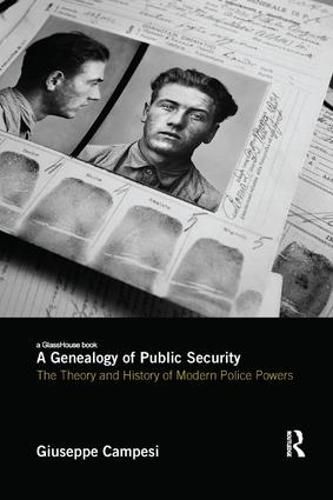
There are many histories of the police as a law-enforcement institution, but no genealogy of the police as a form of power. This book provides a genealogy of modern police by tracing the evolution of police science and of police institutions in Europe, from the ancien regime to the early 19th century. Drawing on the theoretical path outlined by Michel Foucault at the crossroads between historical sociology, critical legal theory and critical criminology, it shows how the development of police power was an integral part of the birth of the modern state’s governmental rationalities and how police institutions were conceived as political technologies for the government and social disciplining of populations. Understanding the modern police not as an institution at the service of the judiciary and the law, but as a complex political technology for governing the economic and social processes typical of modern capitalist societies, this book shows how the police have played an active role in actually shaping order, rather than merely preserving it.
$9.00 standard shipping within Australia
FREE standard shipping within Australia for orders over $100.00
Express & International shipping calculated at checkout
Stock availability can be subject to change without notice. We recommend calling the shop or contacting our online team to check availability of low stock items. Please see our Shopping Online page for more details.
There are many histories of the police as a law-enforcement institution, but no genealogy of the police as a form of power. This book provides a genealogy of modern police by tracing the evolution of police science and of police institutions in Europe, from the ancien regime to the early 19th century. Drawing on the theoretical path outlined by Michel Foucault at the crossroads between historical sociology, critical legal theory and critical criminology, it shows how the development of police power was an integral part of the birth of the modern state’s governmental rationalities and how police institutions were conceived as political technologies for the government and social disciplining of populations. Understanding the modern police not as an institution at the service of the judiciary and the law, but as a complex political technology for governing the economic and social processes typical of modern capitalist societies, this book shows how the police have played an active role in actually shaping order, rather than merely preserving it.
Search our extensive online catalogue.
