Readings Newsletter
Become a Readings Member to make your shopping experience even easier.
Sign in or sign up for free!
You’re not far away from qualifying for FREE standard shipping within Australia
You’ve qualified for FREE standard shipping within Australia
The cart is loading…


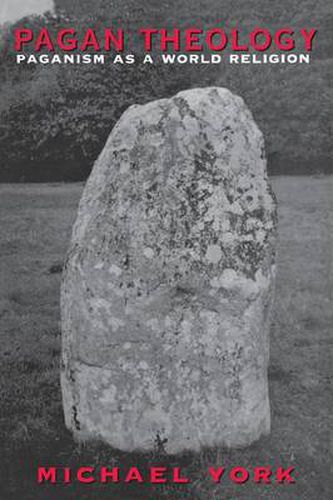
In Pagan Theology, Michael York situates Paganism - one of the fastest-growing spiritual orientations in the West - as a world religion. He provides an introduction to, and expansion of, the concept of Paganism and provides an overview of its theological perspective and practice. He demonstrates it to be a viable and distinguishable spiritual perspective found today in such forms as Chinese folk religion, Shinto, tribal religions, and neo-Paganism in the West. While adherents of many of these traditions do not use the word pagan to describe their beliefs or practices, York contends that there is an identifiable position possessing characteristics and understandings in common for which the label pagan is appropriate. He outlines these characteristics and also explores paganism as a general form of religious behavior which may be found in other religions which are not themselves pagan. In the course of examining such behavior, York provides rich and lively descriptions of religions in action, including Buddhism and Hinduism.
$9.00 standard shipping within Australia
FREE standard shipping within Australia for orders over $100.00
Express & International shipping calculated at checkout
Stock availability can be subject to change without notice. We recommend calling the shop or contacting our online team to check availability of low stock items. Please see our Shopping Online page for more details.
In Pagan Theology, Michael York situates Paganism - one of the fastest-growing spiritual orientations in the West - as a world religion. He provides an introduction to, and expansion of, the concept of Paganism and provides an overview of its theological perspective and practice. He demonstrates it to be a viable and distinguishable spiritual perspective found today in such forms as Chinese folk religion, Shinto, tribal religions, and neo-Paganism in the West. While adherents of many of these traditions do not use the word pagan to describe their beliefs or practices, York contends that there is an identifiable position possessing characteristics and understandings in common for which the label pagan is appropriate. He outlines these characteristics and also explores paganism as a general form of religious behavior which may be found in other religions which are not themselves pagan. In the course of examining such behavior, York provides rich and lively descriptions of religions in action, including Buddhism and Hinduism.
Search our extensive online catalogue.
