Readings Newsletter
Become a Readings Member to make your shopping experience even easier.
Sign in or sign up for free!
You’re not far away from qualifying for FREE standard shipping within Australia
You’ve qualified for FREE standard shipping within Australia
The cart is loading…


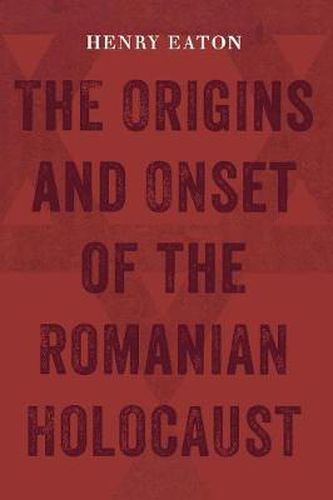
The first mass killings of the Romanian Holocaust in late June to early July 1941 brutally claimed thousands of victims and marked the beginning of the government’s plan to
cleanse the land
of Jews. Moreover, of all the Third Reich’s allies, only Romania undertook its genocide campaign without the intervention of Himmler’s SS. In The Origins and Onset of the Romanian Holocaust, author Henry Eaton traces the historical path to this tragedy by examining both Romania’s antisemitic history and looking at the initial mass killings in detail.
First, Eaton traces the roots of the Romanian government’s decision to exterminate Jews in Romania and in its annexed areas through its long and often violent antisemitic past. While the decision to target the Jews might have been ordered by dictator Ion Antonescu and his top civil and military officials, Eaton argues that it found its basis in an entrenched cultural abuse of Jews dating back to the nineteenth century. In the second section, Eaton analyses the Romanian government’s first killing operations: the execution of 311 Jewish men, women and children at Stanca Rosnovanu by men of the Romanian 6th Cavalry Regiment; the great pogrom in the city of Iasi triggered by agents of the government’s intelligence service; and the two
death trains
in which some 2,700 pogrom survivors perished in freight cars turned into ovens by the summer heat. In the final chapters, Eaton examines the victims and perpetrators in detail and addresses the possible German connections to the killings.
The Origins and Onset of the Romanian Holocaust persuasively challenges the idea that Romania’s adoption of murder as state policy was due to outside pressure. Eaton’s volume will be illuminating reading for Holocaust studies scholars and readers interested in World War II history.
$9.00 standard shipping within Australia
FREE standard shipping within Australia for orders over $100.00
Express & International shipping calculated at checkout
Stock availability can be subject to change without notice. We recommend calling the shop or contacting our online team to check availability of low stock items. Please see our Shopping Online page for more details.
The first mass killings of the Romanian Holocaust in late June to early July 1941 brutally claimed thousands of victims and marked the beginning of the government’s plan to
cleanse the land
of Jews. Moreover, of all the Third Reich’s allies, only Romania undertook its genocide campaign without the intervention of Himmler’s SS. In The Origins and Onset of the Romanian Holocaust, author Henry Eaton traces the historical path to this tragedy by examining both Romania’s antisemitic history and looking at the initial mass killings in detail.
First, Eaton traces the roots of the Romanian government’s decision to exterminate Jews in Romania and in its annexed areas through its long and often violent antisemitic past. While the decision to target the Jews might have been ordered by dictator Ion Antonescu and his top civil and military officials, Eaton argues that it found its basis in an entrenched cultural abuse of Jews dating back to the nineteenth century. In the second section, Eaton analyses the Romanian government’s first killing operations: the execution of 311 Jewish men, women and children at Stanca Rosnovanu by men of the Romanian 6th Cavalry Regiment; the great pogrom in the city of Iasi triggered by agents of the government’s intelligence service; and the two
death trains
in which some 2,700 pogrom survivors perished in freight cars turned into ovens by the summer heat. In the final chapters, Eaton examines the victims and perpetrators in detail and addresses the possible German connections to the killings.
The Origins and Onset of the Romanian Holocaust persuasively challenges the idea that Romania’s adoption of murder as state policy was due to outside pressure. Eaton’s volume will be illuminating reading for Holocaust studies scholars and readers interested in World War II history.
Search our extensive online catalogue.
