Readings Newsletter
Become a Readings Member to make your shopping experience even easier.
Sign in or sign up for free!
You’re not far away from qualifying for FREE standard shipping within Australia
You’ve qualified for FREE standard shipping within Australia
The cart is loading…


This title is printed to order. This book may have been self-published. If so, we cannot guarantee the quality of the content. In the main most books will have gone through the editing process however some may not. We therefore suggest that you be aware of this before ordering this book. If in doubt check either the author or publisher’s details as we are unable to accept any returns unless they are faulty. Please contact us if you have any questions.
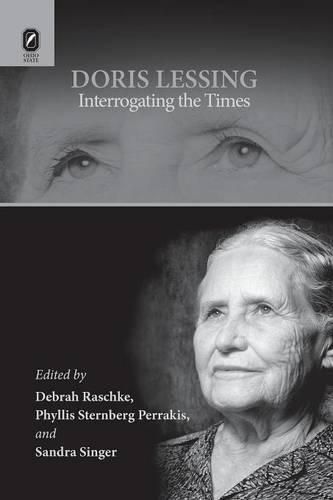
Doris Lessing: Interrogating the Timeswrestles with the ghosts that continue to haunt our most pressing twenty-first-century concerns: how to reconceive imprisoning conceptions of sexuality and gender, how to define terrorism, how to locate the personal, and how to write on race and colonialism in an ever-slippery postmodern world. This collection of essays clearly establishes Lessing’s importance as a unique and necessary voice in contemporary literature and life.In tracing the evolution in Lessing’s representations of controversial subjects, this volume shows how new cultural and political contexts demand new solutions. Focusing on Lessing’s experiments with genre and on the ramifications of narrative itself, the collection asks readers to reformulate some of their most taken-for-granted assumptions about the contemporary world and their relation to it.Contributors to Doris Lessing: Interrogating the Times assess Lessing’s vision of the past and its relevance for the future by revisiting texts from the beginning of her career onward while at the same time probing previous interpretations of these works. These reassessments reveal Lessing’s continued role as a gadfly who, in disrupting rigid constructions of right and wrong and of good and evil, forces her readers to move beyond you are damned, we are saved narratives. As rationales such as these continue to permeate global venues, Lessing’s oeuvre becomes increasingly relevant.
$9.00 standard shipping within Australia
FREE standard shipping within Australia for orders over $100.00
Express & International shipping calculated at checkout
Stock availability can be subject to change without notice. We recommend calling the shop or contacting our online team to check availability of low stock items. Please see our Shopping Online page for more details.
This title is printed to order. This book may have been self-published. If so, we cannot guarantee the quality of the content. In the main most books will have gone through the editing process however some may not. We therefore suggest that you be aware of this before ordering this book. If in doubt check either the author or publisher’s details as we are unable to accept any returns unless they are faulty. Please contact us if you have any questions.
Doris Lessing: Interrogating the Timeswrestles with the ghosts that continue to haunt our most pressing twenty-first-century concerns: how to reconceive imprisoning conceptions of sexuality and gender, how to define terrorism, how to locate the personal, and how to write on race and colonialism in an ever-slippery postmodern world. This collection of essays clearly establishes Lessing’s importance as a unique and necessary voice in contemporary literature and life.In tracing the evolution in Lessing’s representations of controversial subjects, this volume shows how new cultural and political contexts demand new solutions. Focusing on Lessing’s experiments with genre and on the ramifications of narrative itself, the collection asks readers to reformulate some of their most taken-for-granted assumptions about the contemporary world and their relation to it.Contributors to Doris Lessing: Interrogating the Times assess Lessing’s vision of the past and its relevance for the future by revisiting texts from the beginning of her career onward while at the same time probing previous interpretations of these works. These reassessments reveal Lessing’s continued role as a gadfly who, in disrupting rigid constructions of right and wrong and of good and evil, forces her readers to move beyond you are damned, we are saved narratives. As rationales such as these continue to permeate global venues, Lessing’s oeuvre becomes increasingly relevant.
Search our extensive online catalogue.
