Readings Newsletter
Become a Readings Member to make your shopping experience even easier.
Sign in or sign up for free!
You’re not far away from qualifying for FREE standard shipping within Australia
You’ve qualified for FREE standard shipping within Australia
The cart is loading…


This title is printed to order. This book may have been self-published. If so, we cannot guarantee the quality of the content. In the main most books will have gone through the editing process however some may not. We therefore suggest that you be aware of this before ordering this book. If in doubt check either the author or publisher’s details as we are unable to accept any returns unless they are faulty. Please contact us if you have any questions.
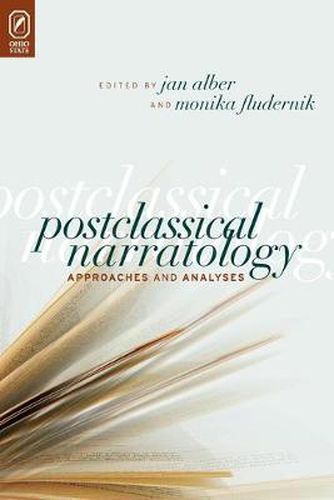
In this volume, an international group of contributors presents new perspectives on narrative. Using David Herman’s 1999 definition of postclassical narratology from Narratologies: New Perspectives on Narrative Analysis (OSUP) as their launching point, these eleven essayists explore the various ways in which new approaches overlap and interrelate to form new ways of understanding narrative texts.
Postclassical narratology has reached a new phase of consolidation but also continued diversification. This collection therefore discriminates between what one could call a critical but frame-abiding and a more radical frame-transcending or frame-shattering handling of the structuralist paradigm. Postclassical Narratology: Approaches and Analyses discusses a large variety of different aspects of narrative, such as extensions of classical narratology, new generic applications (autobiography, oral narratives, poetry, painting, and film), the history of narratology, the issue of fictionality, the role of cognition, and questions of authorship and authority, as well as thematic matters related to ethics, gender, and queering. Additionally, it uses a wide spectrum of critical approaches, including feminism, psychoanalysis, media studies, the rhetorical theory of narrative, unnatural narratology, and cognitive studies. In this manner the essays manage to produce new insights into many key issues in narratology. The contributors also demonstrate that narratologists nowadays see the object of their research as more variegated than was the case twenty years ago: they resort to a number of different methods in combination when approaching a problem, and they tend to ground their analyses in a rich contextual framework.
$9.00 standard shipping within Australia
FREE standard shipping within Australia for orders over $100.00
Express & International shipping calculated at checkout
Stock availability can be subject to change without notice. We recommend calling the shop or contacting our online team to check availability of low stock items. Please see our Shopping Online page for more details.
This title is printed to order. This book may have been self-published. If so, we cannot guarantee the quality of the content. In the main most books will have gone through the editing process however some may not. We therefore suggest that you be aware of this before ordering this book. If in doubt check either the author or publisher’s details as we are unable to accept any returns unless they are faulty. Please contact us if you have any questions.
In this volume, an international group of contributors presents new perspectives on narrative. Using David Herman’s 1999 definition of postclassical narratology from Narratologies: New Perspectives on Narrative Analysis (OSUP) as their launching point, these eleven essayists explore the various ways in which new approaches overlap and interrelate to form new ways of understanding narrative texts.
Postclassical narratology has reached a new phase of consolidation but also continued diversification. This collection therefore discriminates between what one could call a critical but frame-abiding and a more radical frame-transcending or frame-shattering handling of the structuralist paradigm. Postclassical Narratology: Approaches and Analyses discusses a large variety of different aspects of narrative, such as extensions of classical narratology, new generic applications (autobiography, oral narratives, poetry, painting, and film), the history of narratology, the issue of fictionality, the role of cognition, and questions of authorship and authority, as well as thematic matters related to ethics, gender, and queering. Additionally, it uses a wide spectrum of critical approaches, including feminism, psychoanalysis, media studies, the rhetorical theory of narrative, unnatural narratology, and cognitive studies. In this manner the essays manage to produce new insights into many key issues in narratology. The contributors also demonstrate that narratologists nowadays see the object of their research as more variegated than was the case twenty years ago: they resort to a number of different methods in combination when approaching a problem, and they tend to ground their analyses in a rich contextual framework.
Search our extensive online catalogue.
