Readings Newsletter
Become a Readings Member to make your shopping experience even easier.
Sign in or sign up for free!
You’re not far away from qualifying for FREE standard shipping within Australia
You’ve qualified for FREE standard shipping within Australia
The cart is loading…


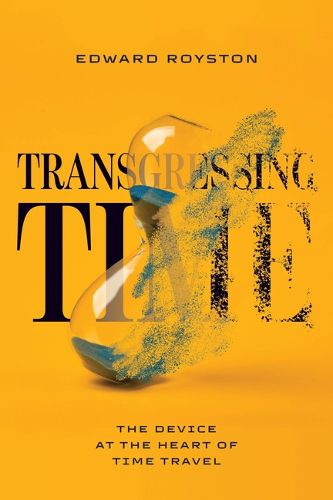
The first systemic analysis of time travel as narrative device, Edward Royston's Transgressing Time argues that as a fictional conceit, time travel can most fruitfully be understood from a narratological perspective that sidesteps questions of its plausibility. In service of this goal, Royston identifies the precise narrative device, "anachronic metalepsis," that powers time travel. Existing at the confluence of narrative's power to manipulate temporality and fiction's power to transgress and displace across ontological boundaries, anachronic metalepsis demonstrates that the power of narrative itself is what enables time travel. Royston bolsters this concept through readings of classics such as Back to the Future and Octavia E. Butler's Kindred, contemporary works such as the video game Outer Wilds and Scott Alexander Howard's The Other Valley, and lesser-known works such as the nineteenth-century Spanish novel El Anacronopete. These readings demonstrate how time travel functions across different mediums and genres and spotlights the ways authors and creators have used anachronic metalepsis to contend with themes of exile, freedom and consequences, the powers and pitfalls of nostalgia, the nature of history and our relationship to it, and the nature of time itself.
$9.00 standard shipping within Australia
FREE standard shipping within Australia for orders over $100.00
Express & International shipping calculated at checkout
Stock availability can be subject to change without notice. We recommend calling the shop or contacting our online team to check availability of low stock items. Please see our Shopping Online page for more details.
The first systemic analysis of time travel as narrative device, Edward Royston's Transgressing Time argues that as a fictional conceit, time travel can most fruitfully be understood from a narratological perspective that sidesteps questions of its plausibility. In service of this goal, Royston identifies the precise narrative device, "anachronic metalepsis," that powers time travel. Existing at the confluence of narrative's power to manipulate temporality and fiction's power to transgress and displace across ontological boundaries, anachronic metalepsis demonstrates that the power of narrative itself is what enables time travel. Royston bolsters this concept through readings of classics such as Back to the Future and Octavia E. Butler's Kindred, contemporary works such as the video game Outer Wilds and Scott Alexander Howard's The Other Valley, and lesser-known works such as the nineteenth-century Spanish novel El Anacronopete. These readings demonstrate how time travel functions across different mediums and genres and spotlights the ways authors and creators have used anachronic metalepsis to contend with themes of exile, freedom and consequences, the powers and pitfalls of nostalgia, the nature of history and our relationship to it, and the nature of time itself.
Search our extensive online catalogue.
