Readings Newsletter
Become a Readings Member to make your shopping experience even easier.
Sign in or sign up for free!
You’re not far away from qualifying for FREE standard shipping within Australia
You’ve qualified for FREE standard shipping within Australia
The cart is loading…


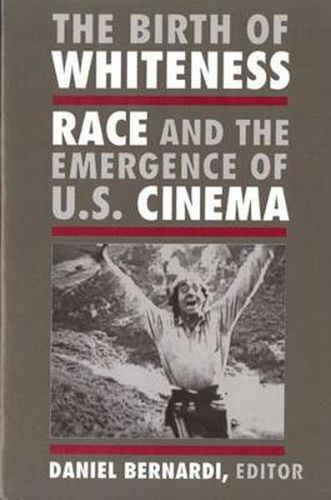
As indelible components of the history of the United States, race and racism have permeated nearly all aspects of life: cultural, economic, political, and social. In this anthology on race in early cinema, 14 scholars examine the origins, dynamics, and ramifications of racism and Eurocentrism and the resistance to both during the early years of American motion pictures. Any discussion of racial themes and practices in any arena inevitably begins with the definition of race. Is race an innate and biologically determined
essence
or is it a culturally constructed category? Is the question irrelevant? Perhaps race exists as an ever-changing historical and social formation that, regardless of any standard definition, involves exploitation, degradation, and struggle. In his introduction, Daniel Bernardi writes that
early cinema has been a clear partner in the hegemonic struggle over the meaning of race
and that it was steadfastly aligned with a Eurocentric world view at the expense of those who didn’t count as white. The contributors to this work tackle these problems and address such subjects as biological determinism, miscegenation, Manifest Destiny, assimilation, and nativism and their impact on early cinema. Analyses of
The Birth of a Nation ,
Romona ,
Nanook of the North , and
Madame Butterfly
and the directorial styles of D.W. Griffith, Oscar Micheaux, and Edwin Porter are included in the volume.
$9.00 standard shipping within Australia
FREE standard shipping within Australia for orders over $100.00
Express & International shipping calculated at checkout
Stock availability can be subject to change without notice. We recommend calling the shop or contacting our online team to check availability of low stock items. Please see our Shopping Online page for more details.
As indelible components of the history of the United States, race and racism have permeated nearly all aspects of life: cultural, economic, political, and social. In this anthology on race in early cinema, 14 scholars examine the origins, dynamics, and ramifications of racism and Eurocentrism and the resistance to both during the early years of American motion pictures. Any discussion of racial themes and practices in any arena inevitably begins with the definition of race. Is race an innate and biologically determined
essence
or is it a culturally constructed category? Is the question irrelevant? Perhaps race exists as an ever-changing historical and social formation that, regardless of any standard definition, involves exploitation, degradation, and struggle. In his introduction, Daniel Bernardi writes that
early cinema has been a clear partner in the hegemonic struggle over the meaning of race
and that it was steadfastly aligned with a Eurocentric world view at the expense of those who didn’t count as white. The contributors to this work tackle these problems and address such subjects as biological determinism, miscegenation, Manifest Destiny, assimilation, and nativism and their impact on early cinema. Analyses of
The Birth of a Nation ,
Romona ,
Nanook of the North , and
Madame Butterfly
and the directorial styles of D.W. Griffith, Oscar Micheaux, and Edwin Porter are included in the volume.
Search our extensive online catalogue.
