Readings Newsletter
Become a Readings Member to make your shopping experience even easier.
Sign in or sign up for free!
You’re not far away from qualifying for FREE standard shipping within Australia
You’ve qualified for FREE standard shipping within Australia
The cart is loading…


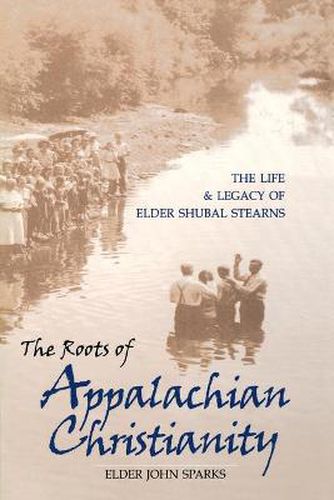
Appalachia’s distinctive brand of Christianity has always been something of a puzzle to mainline American congregations. Often treated as pagan and unchurched, native Appalachian sects are labeled as ultraconservative, primitive, and fatalistic, and the actions of minority sub-groups such as snake handlers are associated with all worshippers in the region. Yet these churches that many regard as being outside the mainstream are living examples of America’s own religious heritage. The emotional and experience-based religion that still thrives in Appalachia is very much at the heart of American worship. The lack of a recognizable father figure like Martin Luther, John Calvin, and John Knox compounds the mystery of Appalachia’s religious origins. Ordained minister John Sparks determined that such a person must have existed, and his search turned up a man less literate, urbane, and well-known than Luther, Calvin, and Knox – but no less charismatic and influential. Shubal Stearns, a New England Baptist minister, led a group of sixteen Baptists – now dubbed The Old Brethren by Old School Baptists churches in Appalachia – from New England to North Carolina in the mid-eighteenth century. His musical barking preaching is still popular, and the association of churches that he established gave birth to many of the disparate denominations prospering in the region today. A man lacking in the scholarship of his peers but endowed with the eccentricities that would make their mark on Appalachian faith, Stearns has long been an object of shame among most Baptist historians. In The Roots of Appalachian Christianity, Sparks depicts an important religious figure in a new light. Poring over pages of out-of-print and little-used histories, Sparks discovered the complexity of Stearns’s character and his impact on Appalachian Christianity. The result is a history not just of this leader but of the roots of a religious movement.
$9.00 standard shipping within Australia
FREE standard shipping within Australia for orders over $100.00
Express & International shipping calculated at checkout
Stock availability can be subject to change without notice. We recommend calling the shop or contacting our online team to check availability of low stock items. Please see our Shopping Online page for more details.
Appalachia’s distinctive brand of Christianity has always been something of a puzzle to mainline American congregations. Often treated as pagan and unchurched, native Appalachian sects are labeled as ultraconservative, primitive, and fatalistic, and the actions of minority sub-groups such as snake handlers are associated with all worshippers in the region. Yet these churches that many regard as being outside the mainstream are living examples of America’s own religious heritage. The emotional and experience-based religion that still thrives in Appalachia is very much at the heart of American worship. The lack of a recognizable father figure like Martin Luther, John Calvin, and John Knox compounds the mystery of Appalachia’s religious origins. Ordained minister John Sparks determined that such a person must have existed, and his search turned up a man less literate, urbane, and well-known than Luther, Calvin, and Knox – but no less charismatic and influential. Shubal Stearns, a New England Baptist minister, led a group of sixteen Baptists – now dubbed The Old Brethren by Old School Baptists churches in Appalachia – from New England to North Carolina in the mid-eighteenth century. His musical barking preaching is still popular, and the association of churches that he established gave birth to many of the disparate denominations prospering in the region today. A man lacking in the scholarship of his peers but endowed with the eccentricities that would make their mark on Appalachian faith, Stearns has long been an object of shame among most Baptist historians. In The Roots of Appalachian Christianity, Sparks depicts an important religious figure in a new light. Poring over pages of out-of-print and little-used histories, Sparks discovered the complexity of Stearns’s character and his impact on Appalachian Christianity. The result is a history not just of this leader but of the roots of a religious movement.
Search our extensive online catalogue.
