Readings Newsletter
Become a Readings Member to make your shopping experience even easier.
Sign in or sign up for free!
You’re not far away from qualifying for FREE standard shipping within Australia
You’ve qualified for FREE standard shipping within Australia
The cart is loading…


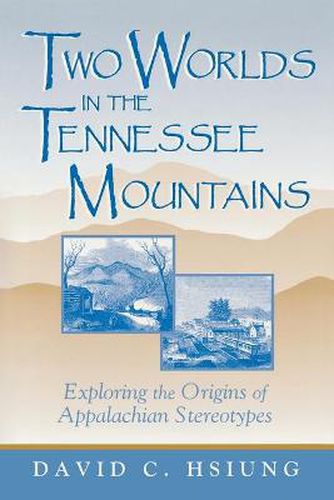
Most Americans know Appalachia through stereotyped images: moonshine and handicrafts, poverty and illiteracy, rugged terrain and isolated mountaineers. Historian David Hsiung maintains that in order to understand the origins of such stereotypes, we must look critically at their underlying concepts, especially those of isolation and community. Hsiung focuses on the mountainous area of upper East Tennessee, tracing this area’s development from the first settlementin the eighteenth century to the eve of the Civil War. Through his examination, he identifies the different ways in which the region’s inhabitants were connected to or separated from other peoples and places. Using an interdisciplinary framework, he analyzes geographical and sociocultural isolation from a number of perspectives, including transportation networks, changing economy, population movement, and topography. This provocative work will stimulate future studies of early Appalachia and serve as a model for the analysis of regional cultures.
$9.00 standard shipping within Australia
FREE standard shipping within Australia for orders over $100.00
Express & International shipping calculated at checkout
Stock availability can be subject to change without notice. We recommend calling the shop or contacting our online team to check availability of low stock items. Please see our Shopping Online page for more details.
Most Americans know Appalachia through stereotyped images: moonshine and handicrafts, poverty and illiteracy, rugged terrain and isolated mountaineers. Historian David Hsiung maintains that in order to understand the origins of such stereotypes, we must look critically at their underlying concepts, especially those of isolation and community. Hsiung focuses on the mountainous area of upper East Tennessee, tracing this area’s development from the first settlementin the eighteenth century to the eve of the Civil War. Through his examination, he identifies the different ways in which the region’s inhabitants were connected to or separated from other peoples and places. Using an interdisciplinary framework, he analyzes geographical and sociocultural isolation from a number of perspectives, including transportation networks, changing economy, population movement, and topography. This provocative work will stimulate future studies of early Appalachia and serve as a model for the analysis of regional cultures.
Search our extensive online catalogue.
