Readings Newsletter
Become a Readings Member to make your shopping experience even easier.
Sign in or sign up for free!
You’re not far away from qualifying for FREE standard shipping within Australia
You’ve qualified for FREE standard shipping within Australia
The cart is loading…


This title is printed to order. This book may have been self-published. If so, we cannot guarantee the quality of the content. In the main most books will have gone through the editing process however some may not. We therefore suggest that you be aware of this before ordering this book. If in doubt check either the author or publisher’s details as we are unable to accept any returns unless they are faulty. Please contact us if you have any questions.
The first comprehensive discussion of the historical archaeology of homelessness
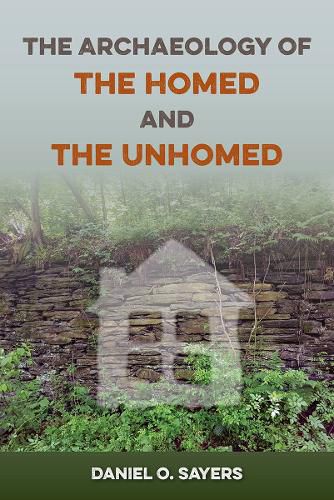
In a time when the idea of home has become central to living the American dream, The Archaeology of the Homed and the Unhomed brings to the forefront the concept of homelessness. The book points out that homelessness remains underexplored in historical archaeology, a fact which may reflect societal biases and marginalization, and it provides the field’s first comprehensive discussion of the subject.
Daniel Sayers argues that the unhomed and the home have been inherently interconnected in the real world across the past several centuries. Sayers builds a conceptual model that focuses on this dynamic and uses it to generate new insights into pre-Civil War communities of Maroons and Indigenous Americans, Great Depression-era hobo communities, and Midwest farmsteads. In doing so, he highlights the social complexities, ambiguities, and significance of the home and the unhomed in the archaeological record. Using a variety of data sources including documentary records and material culture and drawing on extensive fieldwork, Sayers illuminates how homelessness can be created, reproduced, and disparaged by the dominant culture.
The book also emphasizes the importance of applied archaeology. Through these studies, Sayers contends that activist archaeologists have a role-and responsibility-to share their knowledge to help policy makers and stakeholders understand the unhomed, homelessness, and the American experience in this area.
A volume in the series the American Experience in Archaeological Perspective, edited by Michael S. Nassaney and Krysta Ryzewski
$9.00 standard shipping within Australia
FREE standard shipping within Australia for orders over $100.00
Express & International shipping calculated at checkout
Stock availability can be subject to change without notice. We recommend calling the shop or contacting our online team to check availability of low stock items. Please see our Shopping Online page for more details.
This title is printed to order. This book may have been self-published. If so, we cannot guarantee the quality of the content. In the main most books will have gone through the editing process however some may not. We therefore suggest that you be aware of this before ordering this book. If in doubt check either the author or publisher’s details as we are unable to accept any returns unless they are faulty. Please contact us if you have any questions.
The first comprehensive discussion of the historical archaeology of homelessness
In a time when the idea of home has become central to living the American dream, The Archaeology of the Homed and the Unhomed brings to the forefront the concept of homelessness. The book points out that homelessness remains underexplored in historical archaeology, a fact which may reflect societal biases and marginalization, and it provides the field’s first comprehensive discussion of the subject.
Daniel Sayers argues that the unhomed and the home have been inherently interconnected in the real world across the past several centuries. Sayers builds a conceptual model that focuses on this dynamic and uses it to generate new insights into pre-Civil War communities of Maroons and Indigenous Americans, Great Depression-era hobo communities, and Midwest farmsteads. In doing so, he highlights the social complexities, ambiguities, and significance of the home and the unhomed in the archaeological record. Using a variety of data sources including documentary records and material culture and drawing on extensive fieldwork, Sayers illuminates how homelessness can be created, reproduced, and disparaged by the dominant culture.
The book also emphasizes the importance of applied archaeology. Through these studies, Sayers contends that activist archaeologists have a role-and responsibility-to share their knowledge to help policy makers and stakeholders understand the unhomed, homelessness, and the American experience in this area.
A volume in the series the American Experience in Archaeological Perspective, edited by Michael S. Nassaney and Krysta Ryzewski
Search our extensive online catalogue.
