Readings Newsletter
Become a Readings Member to make your shopping experience even easier.
Sign in or sign up for free!
You’re not far away from qualifying for FREE standard shipping within Australia
You’ve qualified for FREE standard shipping within Australia
The cart is loading…


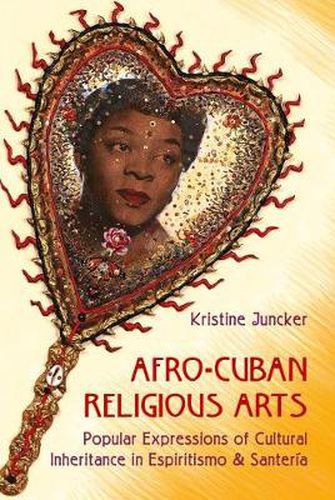
This book profiles four generations of women from one Afro-Cuban religious family. From a plantation in Havana Province in the 1890s to a religious centre in Spanish Harlem in the 1960s, these women were connected by their prominent roles as leaders in the religions they practiced and the dramatic ritual artwork they created. Each woman was a medium in Espiritismo communicating with dead ancestors for guidance or insight and also a santera, or priest of Santeria, who could intervene with the oricha pantheon.
Kristine Juncker argues that by creating art for more than one religion these women shatter the popular assumption that Afro- Caribbean religions are exclusive organisations. Most remarkably, the portraiture, sculptures, and photographs in Afro-Cuban Religious Arts offer rare glimpses into the rituals and iconography of these religions. Santeria altars are closely guarded, limited to initiates, and typically destroyed upon the death of the santera, while Espiritismo artefacts are rarely considered valuable enough to pass on. The unique and protean cultural legacy detailed here reveals insights into how ritual art became popular imagery, sparked a wider dialogue about culture inheritance, attracted new practitioners, and enabled the movement to explode internationally.
$9.00 standard shipping within Australia
FREE standard shipping within Australia for orders over $100.00
Express & International shipping calculated at checkout
Stock availability can be subject to change without notice. We recommend calling the shop or contacting our online team to check availability of low stock items. Please see our Shopping Online page for more details.
This book profiles four generations of women from one Afro-Cuban religious family. From a plantation in Havana Province in the 1890s to a religious centre in Spanish Harlem in the 1960s, these women were connected by their prominent roles as leaders in the religions they practiced and the dramatic ritual artwork they created. Each woman was a medium in Espiritismo communicating with dead ancestors for guidance or insight and also a santera, or priest of Santeria, who could intervene with the oricha pantheon.
Kristine Juncker argues that by creating art for more than one religion these women shatter the popular assumption that Afro- Caribbean religions are exclusive organisations. Most remarkably, the portraiture, sculptures, and photographs in Afro-Cuban Religious Arts offer rare glimpses into the rituals and iconography of these religions. Santeria altars are closely guarded, limited to initiates, and typically destroyed upon the death of the santera, while Espiritismo artefacts are rarely considered valuable enough to pass on. The unique and protean cultural legacy detailed here reveals insights into how ritual art became popular imagery, sparked a wider dialogue about culture inheritance, attracted new practitioners, and enabled the movement to explode internationally.
Search our extensive online catalogue.
