Readings Newsletter
Become a Readings Member to make your shopping experience even easier.
Sign in or sign up for free!
You’re not far away from qualifying for FREE standard shipping within Australia
You’ve qualified for FREE standard shipping within Australia
The cart is loading…


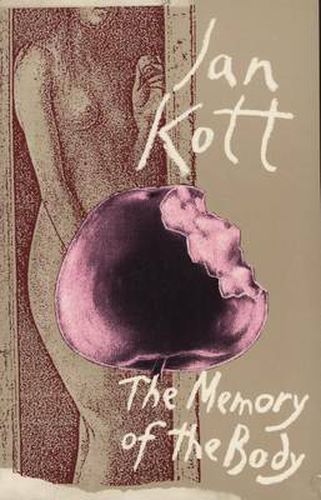
To see through the eyes of essayist and dramaturge Jan Kott is to gain in knowledge not just of the theater but also of human culture. Since his Shakespeare Our Contemporary appeared in English in 1964, Kott’s work has altered–and strengthened–the way critics and the public approach the theater as a whole. The Memory of the Body highlights a number of dramatic personalities and personages: authors and directors Witkiewicz, Brecht, Kantor, Grotoswki, Ingmar Bergman, Wedekind; Tilly Newes on the stage in turn-of-the-century Vienna; the all-too-mortal, two-thirds divine Gilgamesh; and a shaman in rural Korea. In a style flecked with passion, poignancy, and wit, Kott moves beyond a mere discussion of theater to speak of eroticism, painting, love, and death.
$9.00 standard shipping within Australia
FREE standard shipping within Australia for orders over $100.00
Express & International shipping calculated at checkout
Stock availability can be subject to change without notice. We recommend calling the shop or contacting our online team to check availability of low stock items. Please see our Shopping Online page for more details.
To see through the eyes of essayist and dramaturge Jan Kott is to gain in knowledge not just of the theater but also of human culture. Since his Shakespeare Our Contemporary appeared in English in 1964, Kott’s work has altered–and strengthened–the way critics and the public approach the theater as a whole. The Memory of the Body highlights a number of dramatic personalities and personages: authors and directors Witkiewicz, Brecht, Kantor, Grotoswki, Ingmar Bergman, Wedekind; Tilly Newes on the stage in turn-of-the-century Vienna; the all-too-mortal, two-thirds divine Gilgamesh; and a shaman in rural Korea. In a style flecked with passion, poignancy, and wit, Kott moves beyond a mere discussion of theater to speak of eroticism, painting, love, and death.
Search our extensive online catalogue.
