Readings Newsletter
Become a Readings Member to make your shopping experience even easier.
Sign in or sign up for free!
You’re not far away from qualifying for FREE standard shipping within Australia
You’ve qualified for FREE standard shipping within Australia
The cart is loading…


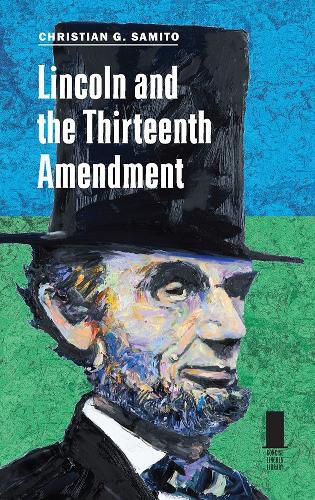
Long before the Civil War, Abraham Lin coln recognized the challenge American slavery posed to the ideals of the Decla ration of Independence. A constitutional amendment would be the ideal solution to ending slavery, yet the idea of such an amendment conflicted with several of Lincoln’s long-held positions. In this study, Christian G. Samito examines how Lincoln’s opposition to amending the United States Constitution shaped his political views before he became president, and how constitutional argu ments overcame Lincoln’s objections, turning him into a supporter of the Thir teenth Amendment by 1864-65.
For most of his political career, Samito shows, Lincoln disputed chang ing the constitution, even to overturn rulings with which he disagreed. Well into his presidency, he argued that emancipation could take place only on the state level because the federal gov ernment had no jurisdiction to control slavery in the states. Between Janu ary 1863 and mid-1864, however, Lin coln came to support a constitutional amendment to abolish slavery because it worked within the constitutional structure and preserved key compo nents of American constitutionalism in the face of Radical Republican schemes.
Samito chronicles lobbying efforts, the final vote in the House on the amend ment resolution, and various charges of corruption and back-room deals. He also considers the Hampton Roads conference, Lincoln’s own thoughts on the meaning of the amendment, and the impact of Lincoln’s assassination on the reading of the amendment. Closing with a lively discussion that applies the Thir teenth Amendment to current events, this concise yet comprehensive volume demonstrates how the constitutional change Lincoln helped bring about con tinues to be relevant today.
$9.00 standard shipping within Australia
FREE standard shipping within Australia for orders over $100.00
Express & International shipping calculated at checkout
Stock availability can be subject to change without notice. We recommend calling the shop or contacting our online team to check availability of low stock items. Please see our Shopping Online page for more details.
Long before the Civil War, Abraham Lin coln recognized the challenge American slavery posed to the ideals of the Decla ration of Independence. A constitutional amendment would be the ideal solution to ending slavery, yet the idea of such an amendment conflicted with several of Lincoln’s long-held positions. In this study, Christian G. Samito examines how Lincoln’s opposition to amending the United States Constitution shaped his political views before he became president, and how constitutional argu ments overcame Lincoln’s objections, turning him into a supporter of the Thir teenth Amendment by 1864-65.
For most of his political career, Samito shows, Lincoln disputed chang ing the constitution, even to overturn rulings with which he disagreed. Well into his presidency, he argued that emancipation could take place only on the state level because the federal gov ernment had no jurisdiction to control slavery in the states. Between Janu ary 1863 and mid-1864, however, Lin coln came to support a constitutional amendment to abolish slavery because it worked within the constitutional structure and preserved key compo nents of American constitutionalism in the face of Radical Republican schemes.
Samito chronicles lobbying efforts, the final vote in the House on the amend ment resolution, and various charges of corruption and back-room deals. He also considers the Hampton Roads conference, Lincoln’s own thoughts on the meaning of the amendment, and the impact of Lincoln’s assassination on the reading of the amendment. Closing with a lively discussion that applies the Thir teenth Amendment to current events, this concise yet comprehensive volume demonstrates how the constitutional change Lincoln helped bring about con tinues to be relevant today.
Search our extensive online catalogue.
