Readings Newsletter
Become a Readings Member to make your shopping experience even easier.
Sign in or sign up for free!
You’re not far away from qualifying for FREE standard shipping within Australia
You’ve qualified for FREE standard shipping within Australia
The cart is loading…


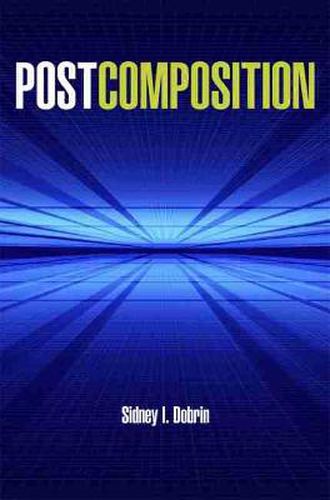
Leading a burgeoning self-critical moment in composition studies and writing program administration, Postcomposition is a fundamental reconsideration of the field that attempts to shift the focus away from pedagogy and writing subjects and toward writing itself. In this forceful and reasoned critique of many of the primary tenets and widely accepted institutional structures of composition studies, Sidney I. Dobrin delivers a series of shocks to the system meant to disrupt the pedagogical imperative and move beyond the existing limits of the discipline. Dobrin evaluates the current state of composition studies, underscoring the difference between composition and writing and arguing that the field’s focus on the administration of writing students and its historically imposed prohibition on theory greatly limit what can be understood about writing. Instead he envisions a more significant approach to writing, one that questions the field’s conservative allegiance to subject and administration and reconsiders writing as spatial and ecological. Using concepts from ecocomposition, spatial theory, network theory, complexity theory, and systems theory, Postcomposition lays the groundwork for a networked theory of writing, and advocates the abandonment of administration as a useful part of the field. He also challenges the usefulness of rhetoric in writing studies, showing how writing exceeds rhetoric. Postcomposition is a detailed consideration of how posthumanism affects the field’s understanding of subjectivity. It also tears at the seams of the
contingent labor problem.
As he articulates his own frustrations with the conservatism of composition studies and builds on previous critiques of the discipline, Dobrin stages a courageous-and inevitably polemical-intellectual challenge to the entrenched ideas and assumptions that have defined composition studies.
$9.00 standard shipping within Australia
FREE standard shipping within Australia for orders over $100.00
Express & International shipping calculated at checkout
Stock availability can be subject to change without notice. We recommend calling the shop or contacting our online team to check availability of low stock items. Please see our Shopping Online page for more details.
Leading a burgeoning self-critical moment in composition studies and writing program administration, Postcomposition is a fundamental reconsideration of the field that attempts to shift the focus away from pedagogy and writing subjects and toward writing itself. In this forceful and reasoned critique of many of the primary tenets and widely accepted institutional structures of composition studies, Sidney I. Dobrin delivers a series of shocks to the system meant to disrupt the pedagogical imperative and move beyond the existing limits of the discipline. Dobrin evaluates the current state of composition studies, underscoring the difference between composition and writing and arguing that the field’s focus on the administration of writing students and its historically imposed prohibition on theory greatly limit what can be understood about writing. Instead he envisions a more significant approach to writing, one that questions the field’s conservative allegiance to subject and administration and reconsiders writing as spatial and ecological. Using concepts from ecocomposition, spatial theory, network theory, complexity theory, and systems theory, Postcomposition lays the groundwork for a networked theory of writing, and advocates the abandonment of administration as a useful part of the field. He also challenges the usefulness of rhetoric in writing studies, showing how writing exceeds rhetoric. Postcomposition is a detailed consideration of how posthumanism affects the field’s understanding of subjectivity. It also tears at the seams of the
contingent labor problem.
As he articulates his own frustrations with the conservatism of composition studies and builds on previous critiques of the discipline, Dobrin stages a courageous-and inevitably polemical-intellectual challenge to the entrenched ideas and assumptions that have defined composition studies.
Search our extensive online catalogue.
