



The House on Diamond Hill: A Cherokee Plantation Story
Tiya Miles
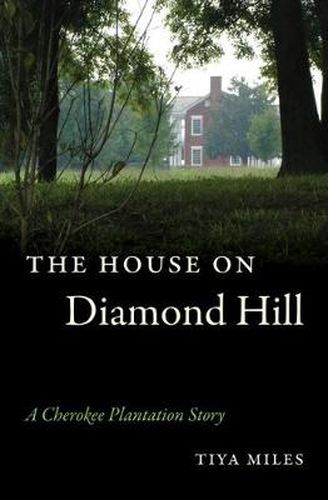
The House on Diamond Hill: A Cherokee Plantation Story
Tiya Miles
At the turn of the nineteenth century, James Vann, a Cherokee chief and entrepreneur, established Diamond Hill in Georgia, the most famous plantation in the southeastern Cherokee Nation. In this first full-length study to reconstruct the history of the plantation, Tiya Miles tells the story of Diamond Hill’s founding, its flourishing, its takeover by white land-lottery winners on the eve of the Cherokee Removal, its decay, and ultimately its renovation in the 1950s.
This moving multiracial history sheds light on the various cultural communities that interacted within the plantation boundaries–from elite Cherokee slaveholders to Cherokee subsistence farmers, from black slaves of various ethnic backgrounds to free blacks from the North and South, from German-speaking Moravian missionaries to white southern skilled laborers. Moreover, the book includes rich portraits of the women of these various communities. Vividly written and extensively researched, this history illuminates gender, class, and cross-racial relationships on the southern frontier.
This item is not currently in-stock. It can be ordered online and is expected to ship in approx 2 weeks
Our stock data is updated periodically, and availability may change throughout the day for in-demand items. Please call the relevant shop for the most current stock information. Prices are subject to change without notice.
Sign in or become a Readings Member to add this title to a wishlist.