Readings Newsletter
Become a Readings Member to make your shopping experience even easier.
Sign in or sign up for free!
You’re not far away from qualifying for FREE standard shipping within Australia
You’ve qualified for FREE standard shipping within Australia
The cart is loading…


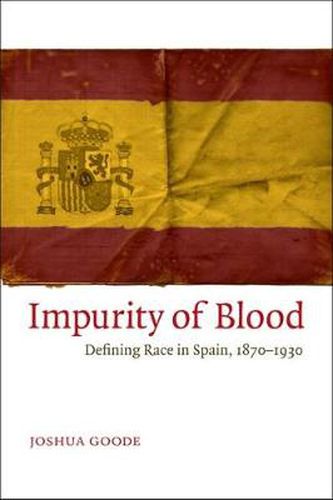
Although Francisco Franco courted the Nazis as allies during the Spanish Civil War in the late 1930s, the Spanish dictator’s racial ideals had little to do with the kind of pure lineage that obsessed the Nazis. Indeed, Franco’s idea of race – that of a National Catholic state as the happy meeting grounds of many different peoples willingly blended together – differed from most European conceptions of race in this period and had its roots in earlier views of Spanish racial identity from the late nineteenth and early twentieth centuries. In Impurity of Blood, Joshua Goode traces the development of racial theories in Spain from 1870 to 1930 in the burgeoning human science of anthropology and in political and social debates, exploring the counterintuitive Spanish proposition that racial mixture rather than racial purity was the bulwark of national strength.
Goode begins with a history of ethnic thought in Spain in the medieval and early modern era, and then details the formation of racial thought in Spain’s nascent human sciences. He goes on to explore the political, social, and cultural manifestations of racial thought at the dawn of the Franco regime and, finally, discusses its ramifications in Francoist Spain and post–World War II Europe. In the process, he brings together normally segregated historiographies of race in Europe.
Goode analyzes the findings of Spanish racial theorists working to forge a Spanish racial identity in the late nineteenth and early twentieth centuries, when race and racial sciences were most in vogue across Europe. Spaniards devised their own racial identities using scientifically substantiated racial ideas and confronted head-on the apparent limitations of Spain’s history by considering them as the defining characteristics of la raza espanola. The task of the Spanish social sciences was to trace the history of racial fusion: to study both the separate elements of the Spanish composition and the factors that had nurtured them. Ultimately, by exploring the development of Spanish racial thought between 1870 and 1930, Goode demonstrates that national identity based on mixture – the inclusion rather than the exclusion of different peoples – did not preclude the establishment of finely wrought and politically charged racial hierarchies.
Providing a new comprehensive view of racial thought in Spain and its connections to the larger twentieth-century formation of racial thought in the West, Impurity of Blood will enlighten and inform scholars of Spanish and European history, racial theory, historical anthropology, and the history of science.
$9.00 standard shipping within Australia
FREE standard shipping within Australia for orders over $100.00
Express & International shipping calculated at checkout
Stock availability can be subject to change without notice. We recommend calling the shop or contacting our online team to check availability of low stock items. Please see our Shopping Online page for more details.
Although Francisco Franco courted the Nazis as allies during the Spanish Civil War in the late 1930s, the Spanish dictator’s racial ideals had little to do with the kind of pure lineage that obsessed the Nazis. Indeed, Franco’s idea of race – that of a National Catholic state as the happy meeting grounds of many different peoples willingly blended together – differed from most European conceptions of race in this period and had its roots in earlier views of Spanish racial identity from the late nineteenth and early twentieth centuries. In Impurity of Blood, Joshua Goode traces the development of racial theories in Spain from 1870 to 1930 in the burgeoning human science of anthropology and in political and social debates, exploring the counterintuitive Spanish proposition that racial mixture rather than racial purity was the bulwark of national strength.
Goode begins with a history of ethnic thought in Spain in the medieval and early modern era, and then details the formation of racial thought in Spain’s nascent human sciences. He goes on to explore the political, social, and cultural manifestations of racial thought at the dawn of the Franco regime and, finally, discusses its ramifications in Francoist Spain and post–World War II Europe. In the process, he brings together normally segregated historiographies of race in Europe.
Goode analyzes the findings of Spanish racial theorists working to forge a Spanish racial identity in the late nineteenth and early twentieth centuries, when race and racial sciences were most in vogue across Europe. Spaniards devised their own racial identities using scientifically substantiated racial ideas and confronted head-on the apparent limitations of Spain’s history by considering them as the defining characteristics of la raza espanola. The task of the Spanish social sciences was to trace the history of racial fusion: to study both the separate elements of the Spanish composition and the factors that had nurtured them. Ultimately, by exploring the development of Spanish racial thought between 1870 and 1930, Goode demonstrates that national identity based on mixture – the inclusion rather than the exclusion of different peoples – did not preclude the establishment of finely wrought and politically charged racial hierarchies.
Providing a new comprehensive view of racial thought in Spain and its connections to the larger twentieth-century formation of racial thought in the West, Impurity of Blood will enlighten and inform scholars of Spanish and European history, racial theory, historical anthropology, and the history of science.
Search our extensive online catalogue.
