Readings Newsletter
Become a Readings Member to make your shopping experience even easier.
Sign in or sign up for free!
You’re not far away from qualifying for FREE standard shipping within Australia
You’ve qualified for FREE standard shipping within Australia
The cart is loading…


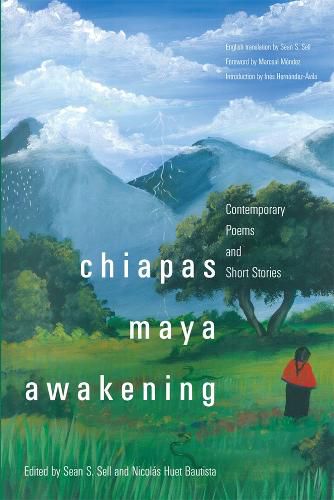
Mexico’s indigenous people speak a number of rich and complex languages today, as they did before the arrival of the Spanish. Yet a common misperception is that Mayas have no languages of their own, only dialectos, and therefore live in silence. In reality, contemporary Mayas are anything but voiceless. Chiapas Maya Awakening, a collection of poems and short stories by indigenous authors from Chiapas, Mexico, is an inspiring testimony to their literary achievements. A unique trilingual edition, it presents the contributors’ works in the living Chiapas Mayan languages of Tsotsil and Tseltal, along with English and Spanish translations.
As Sean S. Sell, Marceal Mendez, and Ines Hernandez-avila explain in their thoughtful introductory pieces, the indigenous authors of this volume were born between the mid-1970s and the mid-1990s, a time of growing cultural awareness among the native communities of Chiapas. Although the authors received a formal education, their language of instruction was Spanish, and they had to pursue independent paths to learn to read and write in their native tongues. In the book’s first half, devoted to poetry, the writers consciously speak for their communities. Their verses evoke the quetzal, the moon, and the sea and reflect the identities of those who celebrate them. The short stories that follow address aspects of modern Maya life. In these stories, mistrust and desperation yield violence among a people whose connection to the land is powerful but still precarious.
Chiapas Maya Awakening demonstrates that Mayas are neither a vanished ancient civilization nor a remote, undeveloped people. Instead, through their memorable poems and stories, the indigenous writers of this volume claim a place of their own within the broader fields of national and global literature.
$9.00 standard shipping within Australia
FREE standard shipping within Australia for orders over $100.00
Express & International shipping calculated at checkout
Stock availability can be subject to change without notice. We recommend calling the shop or contacting our online team to check availability of low stock items. Please see our Shopping Online page for more details.
Mexico’s indigenous people speak a number of rich and complex languages today, as they did before the arrival of the Spanish. Yet a common misperception is that Mayas have no languages of their own, only dialectos, and therefore live in silence. In reality, contemporary Mayas are anything but voiceless. Chiapas Maya Awakening, a collection of poems and short stories by indigenous authors from Chiapas, Mexico, is an inspiring testimony to their literary achievements. A unique trilingual edition, it presents the contributors’ works in the living Chiapas Mayan languages of Tsotsil and Tseltal, along with English and Spanish translations.
As Sean S. Sell, Marceal Mendez, and Ines Hernandez-avila explain in their thoughtful introductory pieces, the indigenous authors of this volume were born between the mid-1970s and the mid-1990s, a time of growing cultural awareness among the native communities of Chiapas. Although the authors received a formal education, their language of instruction was Spanish, and they had to pursue independent paths to learn to read and write in their native tongues. In the book’s first half, devoted to poetry, the writers consciously speak for their communities. Their verses evoke the quetzal, the moon, and the sea and reflect the identities of those who celebrate them. The short stories that follow address aspects of modern Maya life. In these stories, mistrust and desperation yield violence among a people whose connection to the land is powerful but still precarious.
Chiapas Maya Awakening demonstrates that Mayas are neither a vanished ancient civilization nor a remote, undeveloped people. Instead, through their memorable poems and stories, the indigenous writers of this volume claim a place of their own within the broader fields of national and global literature.
Search our extensive online catalogue.
