Readings Newsletter
Become a Readings Member to make your shopping experience even easier.
Sign in or sign up for free!
You’re not far away from qualifying for FREE standard shipping within Australia
You’ve qualified for FREE standard shipping within Australia
The cart is loading…


The question of how archeological complexes in North America relate to contemporary American Indian peoples is a vital one for anthropologists and historians alike - and especially for the Indian nations themselves. Who are the Sioux, for example? Who were their forbears? How and why did early cultures grow or meld with others to give rise to the peoples we know today?
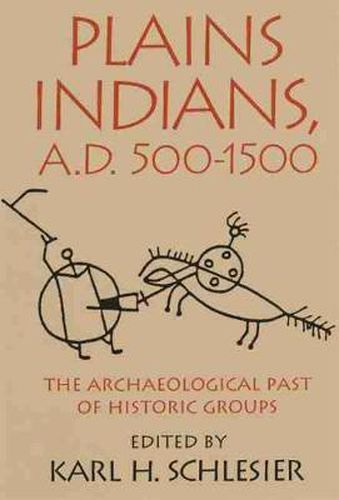
Plains Indian, A.D. 500-1500: The Archaeological Past of Historic Groups, a truly revolutionary book, traces Indian ethnic continuity and cultural diversity in the Great Plains during the millennium preceding the European arrival. A team of specialists, brought together by editor Karl H. Schlesier, use archaeological, ethnographic, and linguistic research to connect North American archaeological complexes to present-day Plains peoples. Apacheans (including the Navajos) and Tanoan-speaking Pueblo peoples of the Rio Grande area are included because of their ancestors’ Plains affiliation.
The contributors summarize the archaeological findings of each region of the Great Plains (including southern Canada and the Rio Grande area) and propose correlations between prehistoric entities and later groups. Beyond archaeological investigation, the collection considers symbolic expressions of ethnicity in religious practice, rituals, myths, objects imbued with sacred power, and sacred places used as
territorial markers
- explicitly recognizing the American Indians’ own resources of historical identity.
Numerous maps and illustrations and an exhaustive bibliography make this an indispensable reference work. Of particular value is a series of maps depicting the evolution of pre-conquest Indian nations from the various language groups.
The explanations offered here are bound to be controversial, but the inquiry is essential if we are to bridge the persistent scholarly gaps between archaeology, ethnography, and Indian traditions in order to recover the early history of America’s Native peoples.
$9.00 standard shipping within Australia
FREE standard shipping within Australia for orders over $100.00
Express & International shipping calculated at checkout
Stock availability can be subject to change without notice. We recommend calling the shop or contacting our online team to check availability of low stock items. Please see our Shopping Online page for more details.
The question of how archeological complexes in North America relate to contemporary American Indian peoples is a vital one for anthropologists and historians alike - and especially for the Indian nations themselves. Who are the Sioux, for example? Who were their forbears? How and why did early cultures grow or meld with others to give rise to the peoples we know today?
Plains Indian, A.D. 500-1500: The Archaeological Past of Historic Groups, a truly revolutionary book, traces Indian ethnic continuity and cultural diversity in the Great Plains during the millennium preceding the European arrival. A team of specialists, brought together by editor Karl H. Schlesier, use archaeological, ethnographic, and linguistic research to connect North American archaeological complexes to present-day Plains peoples. Apacheans (including the Navajos) and Tanoan-speaking Pueblo peoples of the Rio Grande area are included because of their ancestors’ Plains affiliation.
The contributors summarize the archaeological findings of each region of the Great Plains (including southern Canada and the Rio Grande area) and propose correlations between prehistoric entities and later groups. Beyond archaeological investigation, the collection considers symbolic expressions of ethnicity in religious practice, rituals, myths, objects imbued with sacred power, and sacred places used as
territorial markers
- explicitly recognizing the American Indians’ own resources of historical identity.
Numerous maps and illustrations and an exhaustive bibliography make this an indispensable reference work. Of particular value is a series of maps depicting the evolution of pre-conquest Indian nations from the various language groups.
The explanations offered here are bound to be controversial, but the inquiry is essential if we are to bridge the persistent scholarly gaps between archaeology, ethnography, and Indian traditions in order to recover the early history of America’s Native peoples.
Search our extensive online catalogue.
