Readings Newsletter
Become a Readings Member to make your shopping experience even easier.
Sign in or sign up for free!
You’re not far away from qualifying for FREE standard shipping within Australia
You’ve qualified for FREE standard shipping within Australia
The cart is loading…


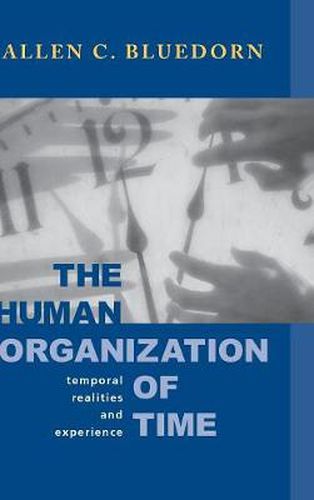
What is time then? asked St. Augustine some 1,600 years ago. It was a question he could not answer, and over the centuries that followed, it was one that few scholars dared to address. Yet there are answers to this question of the true nature of time, and this book discusses several of them as a means of approaching its central concern: that humanity creates a variety of times and these different times affect the experiences of life-as times vary, so does life. Not so much focusing on watches, clocks, and calendars (though these are covered), the author argues that time is a fundamental component of the technological development of humanity.
The book addresses the relationships between time and life on three fundamental premises: (1) all times are not the same, (2) all times are social constructions, and (3) the times humanity creates direct the way humanity lives. The book addresses the major ways in which times differ (polychronicity, speed and punctuality, and orientation to past, present and future), how these differences are coordinated (entrainment), and how these differences affect human life, including such extreme effects that produce the best and worst of times. Building on these differences and the effects they produce, the author examines the possibility of humanity consciously creating more good times than bad. Throughout the analysis, a vital connection between time and life gradually emerges, namely, the impact of time on the meaning of life itself.
Materials from several disciplines inform the discussions, notably theory and research from the social and behavioral sciences, in particular the organization sciences. The author uses historical examples extensively throughout the book, but also presents new results that derive from original data he has collected.
The book will be valuable not only to those involved in the management and organization sciences, but also to sociologists and psychologists, who have largely avoided coming to terms with one of the central issues of human life-time.
$9.00 standard shipping within Australia
FREE standard shipping within Australia for orders over $100.00
Express & International shipping calculated at checkout
Stock availability can be subject to change without notice. We recommend calling the shop or contacting our online team to check availability of low stock items. Please see our Shopping Online page for more details.
What is time then? asked St. Augustine some 1,600 years ago. It was a question he could not answer, and over the centuries that followed, it was one that few scholars dared to address. Yet there are answers to this question of the true nature of time, and this book discusses several of them as a means of approaching its central concern: that humanity creates a variety of times and these different times affect the experiences of life-as times vary, so does life. Not so much focusing on watches, clocks, and calendars (though these are covered), the author argues that time is a fundamental component of the technological development of humanity.
The book addresses the relationships between time and life on three fundamental premises: (1) all times are not the same, (2) all times are social constructions, and (3) the times humanity creates direct the way humanity lives. The book addresses the major ways in which times differ (polychronicity, speed and punctuality, and orientation to past, present and future), how these differences are coordinated (entrainment), and how these differences affect human life, including such extreme effects that produce the best and worst of times. Building on these differences and the effects they produce, the author examines the possibility of humanity consciously creating more good times than bad. Throughout the analysis, a vital connection between time and life gradually emerges, namely, the impact of time on the meaning of life itself.
Materials from several disciplines inform the discussions, notably theory and research from the social and behavioral sciences, in particular the organization sciences. The author uses historical examples extensively throughout the book, but also presents new results that derive from original data he has collected.
The book will be valuable not only to those involved in the management and organization sciences, but also to sociologists and psychologists, who have largely avoided coming to terms with one of the central issues of human life-time.
Search our extensive online catalogue.
