Readings Newsletter
Become a Readings Member to make your shopping experience even easier.
Sign in or sign up for free!
You’re not far away from qualifying for FREE standard shipping within Australia
You’ve qualified for FREE standard shipping within Australia
The cart is loading…


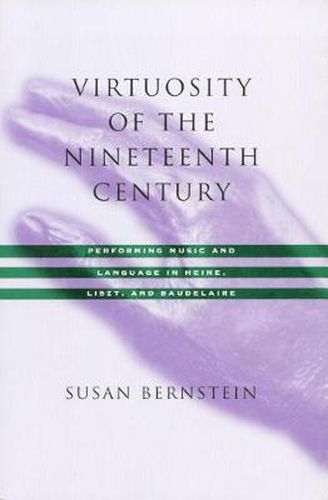
A study of the reflexive relationship between music and language in the nineteenth century, this book maintains a discrete historical focus while drawing upon an aesthetic going back to problems of epic delivery in ancient Greece. Reading Romantic reactions to music together with linguistic and economic conflicts brought about by the rise of journalism, the book pursues the tension around performativity that both connects and separates music and writing. Franz Liszt is the organizing figure in this detailed study of music in Heine and Baudelaire. The acclaimed virtuoso functions both as a metaphor for a musical mode of enunciation and as a historical referent. This dual status dramatizes the struggle at the heart of nineteenth-century aesthetics between poetic self-reference and realism s efforts to report the world accurately. Debates surrounding Liszt pinpoint the conflict between the view that locates sense in the process of its production and the contrary judgment privileging a stable meaning over the exteriority of its execution. This dualism also articulates the problematic relationship of the individual to general social and linguistic structures.
$9.00 standard shipping within Australia
FREE standard shipping within Australia for orders over $100.00
Express & International shipping calculated at checkout
Stock availability can be subject to change without notice. We recommend calling the shop or contacting our online team to check availability of low stock items. Please see our Shopping Online page for more details.
A study of the reflexive relationship between music and language in the nineteenth century, this book maintains a discrete historical focus while drawing upon an aesthetic going back to problems of epic delivery in ancient Greece. Reading Romantic reactions to music together with linguistic and economic conflicts brought about by the rise of journalism, the book pursues the tension around performativity that both connects and separates music and writing. Franz Liszt is the organizing figure in this detailed study of music in Heine and Baudelaire. The acclaimed virtuoso functions both as a metaphor for a musical mode of enunciation and as a historical referent. This dual status dramatizes the struggle at the heart of nineteenth-century aesthetics between poetic self-reference and realism s efforts to report the world accurately. Debates surrounding Liszt pinpoint the conflict between the view that locates sense in the process of its production and the contrary judgment privileging a stable meaning over the exteriority of its execution. This dualism also articulates the problematic relationship of the individual to general social and linguistic structures.
Search our extensive online catalogue.
