Readings Newsletter
Become a Readings Member to make your shopping experience even easier.
Sign in or sign up for free!
You’re not far away from qualifying for FREE standard shipping within Australia
You’ve qualified for FREE standard shipping within Australia
The cart is loading…


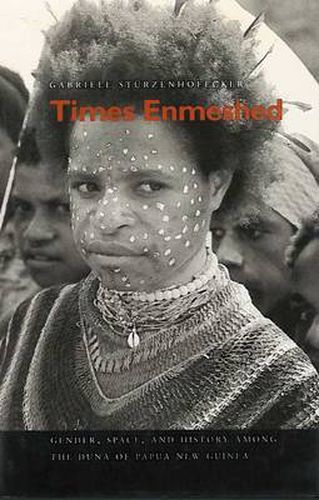
This innovative work explores the historical consciousness of a people caught between two life-worlds. The Duna of Papua New Guinea have developed their own views of historical change, expressed in a fusion of two elements: indigenous ideas of cosmological cycles, and introduced Christian notions of world’s end. The book explores how the formation of historical consciousness is constituted differently for men and women. A central focus is the fluid social environment of the Duna, where new contests about gendered personhood and agency emerge in the context of changing power relationships and arenas of cooperation between the sexes. The author reveals the links between gender and history and uses a gendered analysis as a lens of historical perception for viewing a wide range of topics. In the process, gender becomes an idiom of thinking that permeates all social domains, including kinship, marriage, and residence.
$9.00 standard shipping within Australia
FREE standard shipping within Australia for orders over $100.00
Express & International shipping calculated at checkout
Stock availability can be subject to change without notice. We recommend calling the shop or contacting our online team to check availability of low stock items. Please see our Shopping Online page for more details.
This innovative work explores the historical consciousness of a people caught between two life-worlds. The Duna of Papua New Guinea have developed their own views of historical change, expressed in a fusion of two elements: indigenous ideas of cosmological cycles, and introduced Christian notions of world’s end. The book explores how the formation of historical consciousness is constituted differently for men and women. A central focus is the fluid social environment of the Duna, where new contests about gendered personhood and agency emerge in the context of changing power relationships and arenas of cooperation between the sexes. The author reveals the links between gender and history and uses a gendered analysis as a lens of historical perception for viewing a wide range of topics. In the process, gender becomes an idiom of thinking that permeates all social domains, including kinship, marriage, and residence.
Search our extensive online catalogue.
