Readings Newsletter
Become a Readings Member to make your shopping experience even easier.
Sign in or sign up for free!
You’re not far away from qualifying for FREE standard shipping within Australia
You’ve qualified for FREE standard shipping within Australia
The cart is loading…


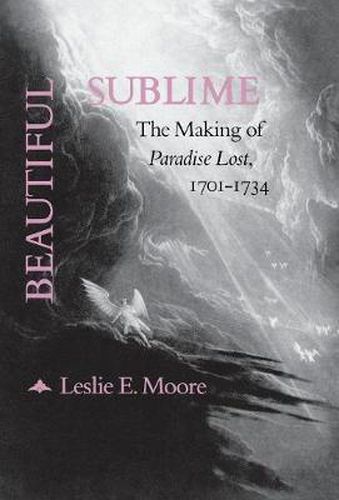
‘Sublime’ and ‘Milton’ - no other pairing is used more frequently in early discussions of the author of Paradise Lost: Addison finds Milton’s genius ‘wonderfully turned to the Sublime’, John Dennis calls Milton ‘the sublimist of all our poets’, while Jonathan Richardson concludes that Milton’s mind ‘is truly poetical. Great, strong, elegant and sublime’. Modern critics look askance at these ‘sublime Miltonists’, who are charged with forcing Paradise Lost, they took what was essentially a Restoration term and challeged it with an alternative aesthetic category - the beautiful. Though beauty did mark a certain generic stability (in a Burkean sense), it came increasingly to represent generic transformation, which in its most radical form recast the notion of a ‘sublime Milton’. It is this play of oxymorous - sublime epic and beautiful sublime - that marks the brilliance of the early eighteenth century’ criticism of Paradise Lost. To explore the early-eighteenth-century view of the ‘sublime Milton’, the author analyzes the work of five readers of Paradise Lost during the years 1701-34: Joseph Addison, the only writer of the five who attained any lasting fame; John Dennis, by far the most important - and overlooked - of the early Miltonists; Anne Finch, Countess of Winchilsea, author of a brilliant parody of Book 8 and of even more remarkable accounts of Eve; Jane Adams, a lyric poet from Scotland who reimagined the domestic hierarchy of Adam and Eve; and Jonathan Richardson, who attempted the first Christian interpretation of Paradise Lost and who authored the first biography of Milton as a ‘sublime poet’. Together these critics represent the richness, cohesion, and variety of the interpretive community reading Paradise Lost in the first decades of the eighteenth century.<
$9.00 standard shipping within Australia
FREE standard shipping within Australia for orders over $100.00
Express & International shipping calculated at checkout
Stock availability can be subject to change without notice. We recommend calling the shop or contacting our online team to check availability of low stock items. Please see our Shopping Online page for more details.
‘Sublime’ and ‘Milton’ - no other pairing is used more frequently in early discussions of the author of Paradise Lost: Addison finds Milton’s genius ‘wonderfully turned to the Sublime’, John Dennis calls Milton ‘the sublimist of all our poets’, while Jonathan Richardson concludes that Milton’s mind ‘is truly poetical. Great, strong, elegant and sublime’. Modern critics look askance at these ‘sublime Miltonists’, who are charged with forcing Paradise Lost, they took what was essentially a Restoration term and challeged it with an alternative aesthetic category - the beautiful. Though beauty did mark a certain generic stability (in a Burkean sense), it came increasingly to represent generic transformation, which in its most radical form recast the notion of a ‘sublime Milton’. It is this play of oxymorous - sublime epic and beautiful sublime - that marks the brilliance of the early eighteenth century’ criticism of Paradise Lost. To explore the early-eighteenth-century view of the ‘sublime Milton’, the author analyzes the work of five readers of Paradise Lost during the years 1701-34: Joseph Addison, the only writer of the five who attained any lasting fame; John Dennis, by far the most important - and overlooked - of the early Miltonists; Anne Finch, Countess of Winchilsea, author of a brilliant parody of Book 8 and of even more remarkable accounts of Eve; Jane Adams, a lyric poet from Scotland who reimagined the domestic hierarchy of Adam and Eve; and Jonathan Richardson, who attempted the first Christian interpretation of Paradise Lost and who authored the first biography of Milton as a ‘sublime poet’. Together these critics represent the richness, cohesion, and variety of the interpretive community reading Paradise Lost in the first decades of the eighteenth century.<
Search our extensive online catalogue.
