Readings Newsletter
Become a Readings Member to make your shopping experience even easier.
Sign in or sign up for free!
You’re not far away from qualifying for FREE standard shipping within Australia
You’ve qualified for FREE standard shipping within Australia
The cart is loading…


This title is printed to order. This book may have been self-published. If so, we cannot guarantee the quality of the content. In the main most books will have gone through the editing process however some may not. We therefore suggest that you be aware of this before ordering this book. If in doubt check either the author or publisher’s details as we are unable to accept any returns unless they are faulty. Please contact us if you have any questions.
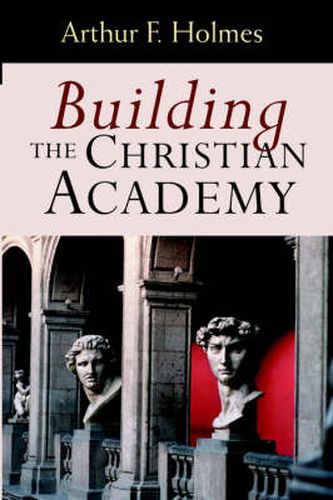
Until relatively recently, the history of higher education in the West was the story of a Christian academic tradition that played a major role in both intellectual history and the history of the church. Over the last one hundred years, however, we have witnessed the progressive secularization of higher education. George Marsden goes so far as to suggest that the American university has lost its soul. But what was that putatively Christian soul? Precisely what in the Christian tradition has now been lost? And what should we know about that tradition as a condition of practical wisdom for the present? Seeking to answer these questions, Arthur Holmes here explores the Christian tradition of learning, focusing on seven formative episodes in history that pertain to building and maintaining a strong Christian academy today. Holmes’s fascinating treatment is set within the history of ideas - the early church in a pagan culture, Augustine’s formative influence on monastery and cathedral schools, the rise and decline of scholasticism, Renaissance humanism’s contribution to the Protestant Reformation, the utilitarian view of education that accompanied the scientific revolution, and struggles with Enlightenment secularization - and incorporates the educational thought of Plato and Isocrates, Clement and Origen, Abelard and Hugh of St. Victor, Aquinas and Bonaventure, Erasmus and the Reformers, Francis Bacon and John Milton, and John Henry Newman.
$9.00 standard shipping within Australia
FREE standard shipping within Australia for orders over $100.00
Express & International shipping calculated at checkout
Stock availability can be subject to change without notice. We recommend calling the shop or contacting our online team to check availability of low stock items. Please see our Shopping Online page for more details.
This title is printed to order. This book may have been self-published. If so, we cannot guarantee the quality of the content. In the main most books will have gone through the editing process however some may not. We therefore suggest that you be aware of this before ordering this book. If in doubt check either the author or publisher’s details as we are unable to accept any returns unless they are faulty. Please contact us if you have any questions.
Until relatively recently, the history of higher education in the West was the story of a Christian academic tradition that played a major role in both intellectual history and the history of the church. Over the last one hundred years, however, we have witnessed the progressive secularization of higher education. George Marsden goes so far as to suggest that the American university has lost its soul. But what was that putatively Christian soul? Precisely what in the Christian tradition has now been lost? And what should we know about that tradition as a condition of practical wisdom for the present? Seeking to answer these questions, Arthur Holmes here explores the Christian tradition of learning, focusing on seven formative episodes in history that pertain to building and maintaining a strong Christian academy today. Holmes’s fascinating treatment is set within the history of ideas - the early church in a pagan culture, Augustine’s formative influence on monastery and cathedral schools, the rise and decline of scholasticism, Renaissance humanism’s contribution to the Protestant Reformation, the utilitarian view of education that accompanied the scientific revolution, and struggles with Enlightenment secularization - and incorporates the educational thought of Plato and Isocrates, Clement and Origen, Abelard and Hugh of St. Victor, Aquinas and Bonaventure, Erasmus and the Reformers, Francis Bacon and John Milton, and John Henry Newman.
Search our extensive online catalogue.
